Cable Railing vs Frameless Glass — How to Choose
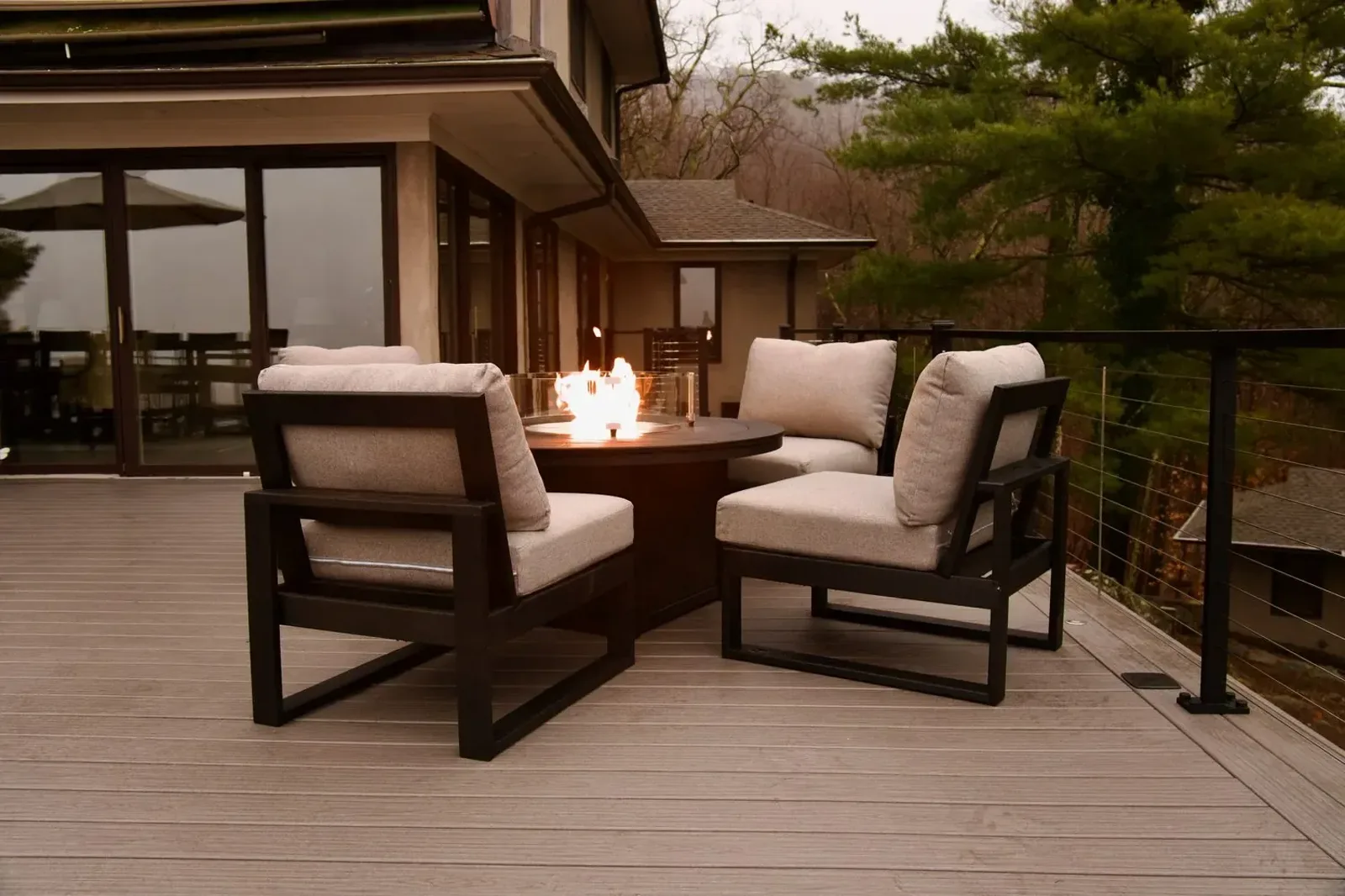
Cable railing and frameless glass both solve the same problem. You spent real money on a view, and you do not want a fat wood railing chopping it into pieces. Both systems get out of the way so you see the water, the ridgeline, or the woods instead of the rail. But they are not the same product, they do not age the same, and they are not right for the same sites. Here is the straight version so you choose with your eyes open.
What each one is
Cable railing is a series of thin horizontal stainless steel cables running between posts, tensioned tight so they read as faint lines across your view. You see through and past them. From a few feet back, on the right site, they nearly disappear. The posts and top rail are the visible structure, and the cables fill the space between.
Frameless glass is exactly what it sounds like. Tempered safety glass panels held at the base, with no metal frame around each panel. From your chair, it is as close to nothing as a code-compliant barrier gets. Wind does not come through it, sound does not come through it, and the view is completely uninterrupted, no lines at all.
Maintenance is the real difference
This is where most people make the decision once they understand it.
Cable railing is low effort. Wipe the posts now and then, and every few years check the cable tension and snug it up, because cables can relax slightly over time, especially on long runs. Stainless handles weather well. Dust and pollen do not show much. It is close to set-and-forget.
Frameless glass is the opposite. Glass shows everything. Every fingerprint, every water spot, every bit of pollen, every bird. If you live where pollen coats everything each spring or where the wind carries dust, you are cleaning glass to keep it looking like glass. People love frameless glass and then learn they signed up for a cleaning routine. We tell clients that up front, because a smudged glass rail looks worse than a clean cable rail, and that is on you to keep up, not us.
What each looks like in five years
Cable in five years, installed right in good stainless, looks like cable. Maybe a tension check along the way. It ages quietly.
Glass in five years depends entirely on how you treat it. Kept clean, it is stunning, the clearest barrier money buys. Neglected, it gets a permanent haze from hard-water spotting and grime that regular cleaning stops removing. The glass itself does not fail. The look does, if you let it.
The cost difference
We do not put dollar figures in writing, and your real number depends on the layout, the run length, and the site. But the general order holds across projects. Frameless glass is the premium option and costs more than cable, both in material and in the careful install glass demands. Cable railing sits below it, still a premium system well above a standard picket rail, but more attainable for long runs. We walk you through the real range for your specific deck at the consultation.
What view each one gives you
Cable gives you an open, airy view with faint horizontal lines and air moving through. On a breezy hilltop or a deck where you want the wind, that airflow is a feature. The lines are visible up close and vanish from a distance.
Glass gives you a sealed, frameless, totally uninterrupted view, plus a wind and sound block. On an exposed deck where wind ruins the evening, glass turns an unusable corner into your favorite seat. By a pool, it keeps the wind off without closing in the space. That barrier is either exactly what you want or the opposite, depending on whether you want the breeze.
Which site calls for which
We match the system to the site, not the other way around. A wind-exposed deck on a ridge or open water, where wind is the problem, leans glass for the shelter. A deck where you want airflow and a lighter, more open look, and where someone will not religiously clean glass, leans cable. Coastal-style salt exposure favors quality stainless cable. A modern, architectural home often wants the clean nothing of glass. A more natural or rustic setting often wants the quieter line of cable.
What the Trex Signature X-Series does
When we run cable, the Trex Signature X-Series railing is a system we reach for, and it does things lesser cable kits do not. The aluminum frame is engineered for the tension cable needs without the posts looking bulky, so you get strength and a thin profile at the same time. It is a true engineered railing system, color-matched and detailed to the deck, not a bag of hardware bolted to wood posts that will eventually loosen. The cable infill stays tensioned and clean-looking because the frame is built to hold it. Engineering and permits for the railing are included in our build, never priced separately, because a railing is a life-safety system and we treat it like one.
Both systems are great when they fit the site. The wrong one fights you for years. We make sure you get the right one.
Call (845) 985-1000 or request a free deck estimate at pinnacledecking.com.
Frequently asked
Which is more expensive, cable or frameless glass?
Frameless glass is the premium choice and costs more than cable, in both material and install. Cable is still a premium system above a standard rail, but more attainable on long runs. We give you the real range for your deck at the consultation.
Does cable railing need a lot of maintenance?
No. Wipe the posts occasionally and check the cable tension every few years to snug it up. Quality stainless handles our weather well. It is close to set-and-forget.
Is frameless glass hard to keep clean?
It shows everything, fingerprints, water spots, pollen. If you keep up with it, it looks incredible. If you neglect it, hard-water haze can set in permanently. We tell clients the cleaning reality before they choose it.
When should I pick glass over cable?
When wind is the problem. On an exposed ridge or open-water deck, glass blocks the wind and sound and makes an unusable spot comfortable. If you want airflow and a lighter look, cable is usually the better fit.