Heat Migration in Composite Decking, the Honest Version
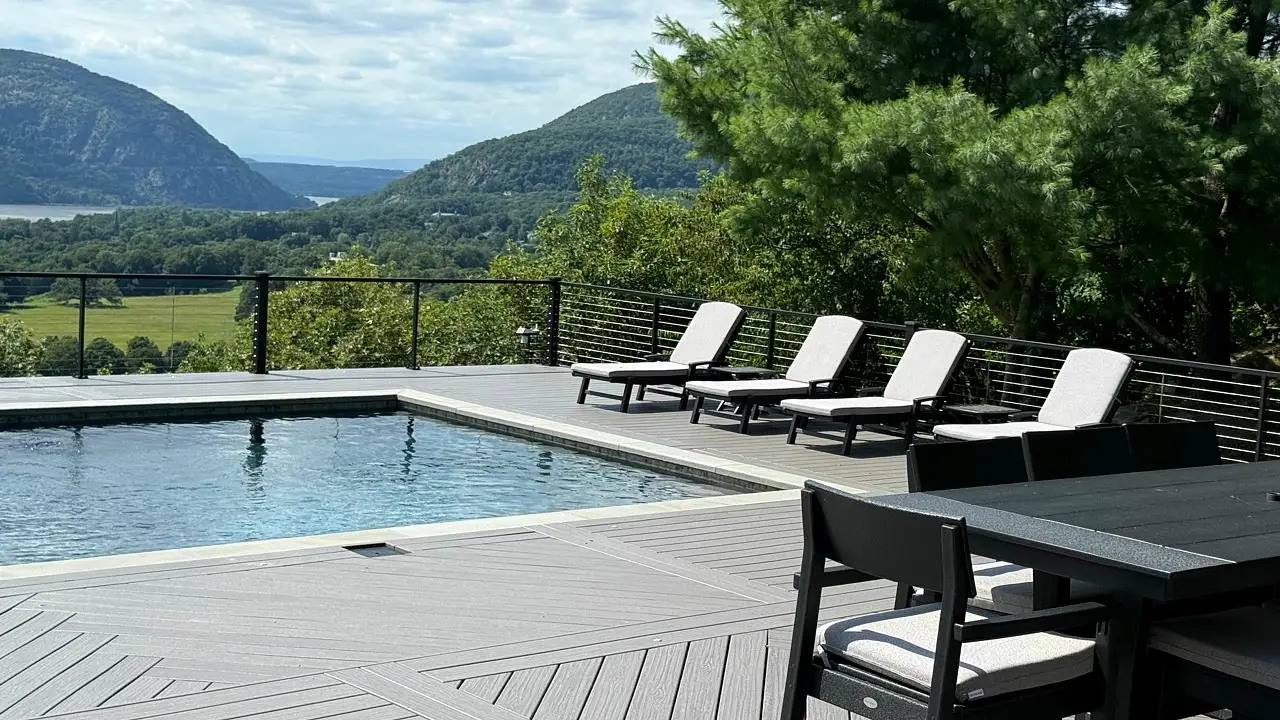
Dark composite gets hot in direct sun. Anyone who tells you otherwise is selling something. It's physics, it applies to every composite on the market, and it applies to wood and stone too. The question was never whether your deck warms up. It's how hot, on which board, in which spot, at what time of day — and what we do at the design stage to keep it comfortable underfoot.
Most homeowners never get that conversation before they sign. They get a sales pitch with a temperature number on it. So let us tell you how that number gets cooked.
Shame on both sides
Here's the game. One company picks the hottest dark board it can find and runs a comparison that makes everyone else look like a frying pan. The other company picks its own lightest board and runs the opposite test to look cool and gentle. Both are technically true. Both are garbage.
Shame on both of them. A staged test on a chosen board on a chosen day tells you nothing about how your deck feels in your yard. The real answer depends on color, sun, shade, the time of day you actually use the space, and how the deck is built. We're not going to throw a fake degree number at you, because the honest one depends on all of that.
What actually drives the heat
Color is the biggest lever, and it's not close. Deep browns, charcoals, and near-blacks soak up the most and run the hottest. Lighter grays, weathered tones, and tans run noticeably cooler in the same sun. Same reason a black car bakes and a white one doesn't. Composite is dense and holds heat, so a dark board in full afternoon sun gets warm enough to notice on bare feet.
The board line matters too. Trex Transcend Lineage is built with heat-mitigating technology to run cooler in direct sun than a comparable color otherwise would. That's its whole reason for existing. It does not make a board cold — nothing does that, and Trex says so plainly on the darker colors — but it meaningfully knocks down how hot the surface gets. For a south-facing deck with no shade, or a client who lives barefoot all summer, that's often the smart call.
Orientation is half the answer before we ever pick a board
Before color, we look at where the sun goes. A deck on the north or east side gets morning sun and afternoon shade, so heat is rarely the issue no matter the color. A south or west face takes the full afternoon load in summer — exactly when you want to be out there. Same board, completely different deck, decided by orientation alone.
That's why we walk the site and watch the sun before we recommend anything. If your deck faces the worst of the afternoon and you still want it dark, fine — we go in knowing we're designing around heat, and we've got moves for that.
The moves that bring it down
Color and orientation set the baseline. Design takes it from there.
Shade is the strongest tool we have. A pergola, a covered section, a pavilion over the seating zone changes everything, because shaded composite stays cool regardless of color. We'll often split a deck on purpose — a shaded zone for the table and the lounge where people actually sit, an open zone for sun by the rail. You get the dark, dramatic look and a comfortable place to put your feet. Run the barefoot paths, from the pool or the door, across the cooler stretches. And on the right project, a lighter field with a dark border gives you the contrast without turning the whole surface into a heat sink.
Heat in composite is real, it's predictable, and it's solvable. The mistake is ignoring it until the first hot weekend and getting stuck with a deck you can't cross barefoot. Dark and dramatic or light and cool — both are on the table. We just make sure you choose with the whole picture in front of you instead of a rigged test.
Call (845) 985-1000 or request a free deck estimate at pinnacledecking.com.
Frequently asked
Does composite decking get hotter than wood?
Composite is dense and holds heat, so a dark board in full sun runs warm. But color and sun exposure drive it far more than the material itself. A light composite in part shade stays cool, and a dark board in full afternoon sun warms up — including wood and stone.
Which Trex line stays cooler in the sun?
Trex Transcend Lineage is built with heat-mitigating technology to run cooler in direct sun, which makes it a strong choice for unshaded, south-facing decks. In lighter colors or shaded sites, Signature performs great too. We match the line to your exposure.
Can I still get a dark deck if I walk barefoot?
Yes, with the right design. We shade the seating zones, run the barefoot paths across cooler stretches, and can put a lighter field inside a dark border. You can have the dramatic look and a comfortable surface.
Why shouldn't I trust the heat comparisons I see online?
Because both sides stage them. One side tests the hottest dark board it can find, the other tests its own lightest. Both are technically true and neither tells you how your deck will feel. Real comfort comes from your color, your sun, and how the deck is designed — not a brochure test.