Why Deck Fascia Pulls Away, Waves, or Splits — and Why More Screws Usually Make It Worse
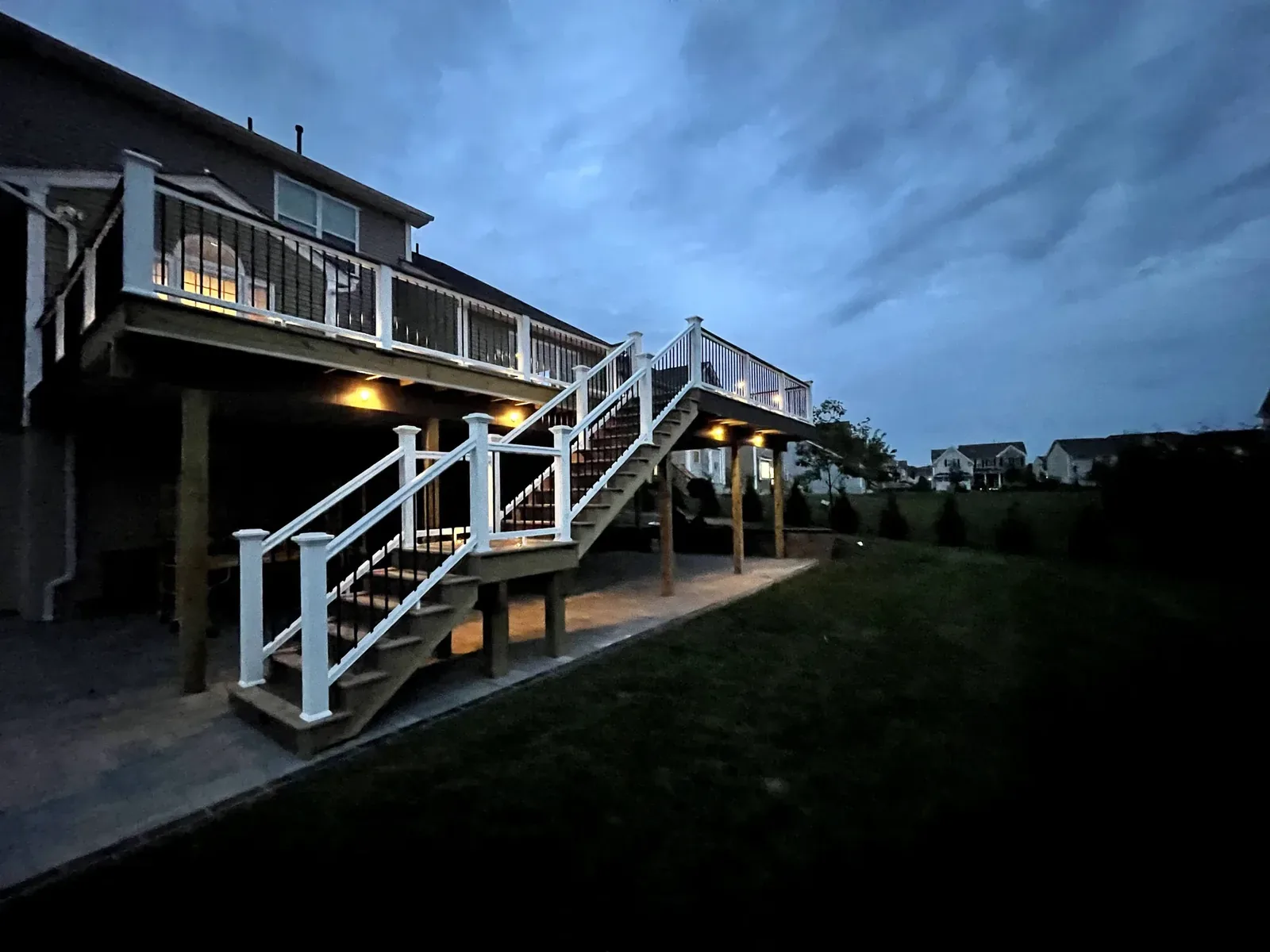
Fascia is the trim board that wraps the outside edge of a deck — the vertical face that covers the rim joists and stair stringers and gives the whole structure its finished line. It is the most visible board on the deck from the yard, and it is also the one that fails most visibly: waving between fasteners, splitting at the screw lines, or pulling off the frame a season or two after everything looked perfect.
The instinctive repair is more screws. Snug the wave down, add a few fasteners, done. And a year later the fascia is worse — more waves, new splits, sometimes a corner popped loose entirely. That is not bad luck. Adding fasteners to a fascia problem usually feeds the exact mechanism that caused it. Fascia fails for a short list of reasons, and almost all of them come down to a board that needed to move being told it could not.
Fascia is not a deck board, and it cannot be fastened like one
A composite deck board lies flat, carries load across many joists, and is held by a fastening system engineered for its movement. Fascia lives a harder life. It hangs vertically in full sun on the hottest face of the deck, it is often a wider profile than the deck boards, and long runs are common because the eye wants one continuous line. More width and more length mean more total movement, and a vertical board gets none of the help gravity gives a deck board.
Manufacturers treat fascia as its own installation category for exactly this reason — with its own fastener types, its own gapping at ends and joints, and its own fastening pattern that is deliberately designed to let the board move. Those specifics vary by product line and get revised, so the current manufacturer guide for the product on your deck is the governing document. But the principle behind every one of those guides is the same: fascia is attached so it can expand and contract in place, not clamped rigid.
Why more screws make it worse
Picture a long fascia run screwed tight every few inches, top and bottom, on a July afternoon. The board warms, gets longer, and pushes against every fastener at once. Something has to give. If the fasteners hold, the board bows outward between them — that is the wave. If the board gives, it tears at the fastener holes — that is the splitting, which almost always tracks along the screw lines. If the joint detailing gave it nowhere to grow lengthwise, the ends grind against each other or blow a miter open at the corner.
Every added screw shortens the free span the board has to relieve itself in, and concentrates the movement force at more points. The repair that "tightened it up" in April built the failure that shows in August. The correct fastening does the opposite: fewer, correctly typed fasteners in the manufacturer's pattern, gapped joints that leave room at the ends, and — in many current systems — slotted or movement-rated fasteners that hold the board to the plane while letting it slide. Tight is not the goal. Controlled is.
The frame behind the fascia moves too
Fascia is only as stable as the rim it is fastened to, and rims are the wettest, most exposed framing on the deck. Framing lumber that went on wet dries and shrinks for its first year or more; a rim that shrinks, twists, or crowns carries its fascia with it. A perfectly installed fascia board on a moving rim will read as a fascia problem every time.
Water makes it worse on a schedule. The deck edge is where runoff concentrates, and a rim that stays damp cycles the fascia's fasteners in and out of swollen wood. This is the same lesson the rest of the structure teaches: the visible layer reports on the hidden one. We covered the framing side of that story in the deck you never see — fascia is simply the place the frame's condition shows up first, because a straight dark board in raking sunlight hides nothing.
Heat rounds out the picture. Fascia over a sealed cavity — solid skirting, no venting, dark boards — bakes from both sides. Trapped heat raises the board's operating temperature and widens its daily movement swing. Ventilation behind the fascia and skirting is a design decision, made when the edge is detailed, and it quietly lowers the stress on every board and fastener at the perimeter.
Corners, stairs, and edges: where geometry does the work
The failures cluster where the fascia changes direction:
- Corners. Two boards meeting at a miter each want to grow toward the joint. The detail has to accommodate that — with the joint style and gapping the manufacturer specifies — or the miter opens and closes with the seasons until it splits.
- Stairs. Stair fascia and stringer wraps follow a sawtooth of short pieces and angle cuts, each with its own ends and its own movement. It needs its own layout, not leftovers from the long runs, and the transitions at the top and bottom of the flight need room designed in.
- The top edge. Where fascia meets the deck surface, a picture-frame border earns its keep — it covers the board ends, defines the edge, and lets the fascia-to-surface joint be a designed detail instead of a collision between two moving parts.
- Support. A wide fascia spanning too far between attachment points will wave no matter how it is fastened. Long or deep faces get backing and blocking planned in the framing stage.
Repair means resetting the detail, not reinforcing the mistake
When fascia has already failed, the honest first step is diagnosis, not fasteners. Split lines along screws point to over-fastening or the wrong fastener. Uniform waving points to restricted movement or heat. A whole face gone out of plane points behind the board — a rim that has moved or framing that stayed wet. Each cause has a different fix, and only one of them is solved at the fascia itself.
Done right, the repair usually means removing the run, correcting what is behind it, and reinstalling — new boards where old ones are torn, movement-rated fastening in the correct pattern, gapped joints, ventilation preserved. That is more work than driving screws into a wave. It is also the version that is still straight in five years. If the edge failure turns out to be a symptom of a wetter, older structure, step back and read our guide on repair, resurface, or rebuild before spending on trim.
Fascia is the deck's signature line. When it is straight, nobody notices it, which is the point. Keeping it straight was never about screws — it was about giving one hardworking board permission to move.
Frequently asked
My fascia is wavy — can I just screw it down flat?
You can flatten it for a season, but the wave is stored movement, and more screws give it fewer places to go. The board usually answers by splitting at the fastener lines. The lasting fix is refastening the run with the manufacturer's pattern and fastener type, with gapped joints that let the board move.
Why did my fascia split along the screw line?
Because the board tried to expand or contract and the fasteners would not let it — so it tore at its weakest points, the holes. Wrong fastener type, too many fasteners, or no end gaps are the usual causes. Split boards need replacement; refastening the old board just relocates the tear.
Is failing fascia a sign of a bigger problem?
Sometimes. Fascia that moves with the frame — a whole face out of plane, fasteners working loose in soft wood — can be reporting a wet or shifting rim behind it. Check what the fascia is attached to before replacing what is attached.