The Deck You Never See: Why the Frame Decides How Long the Deck Lives
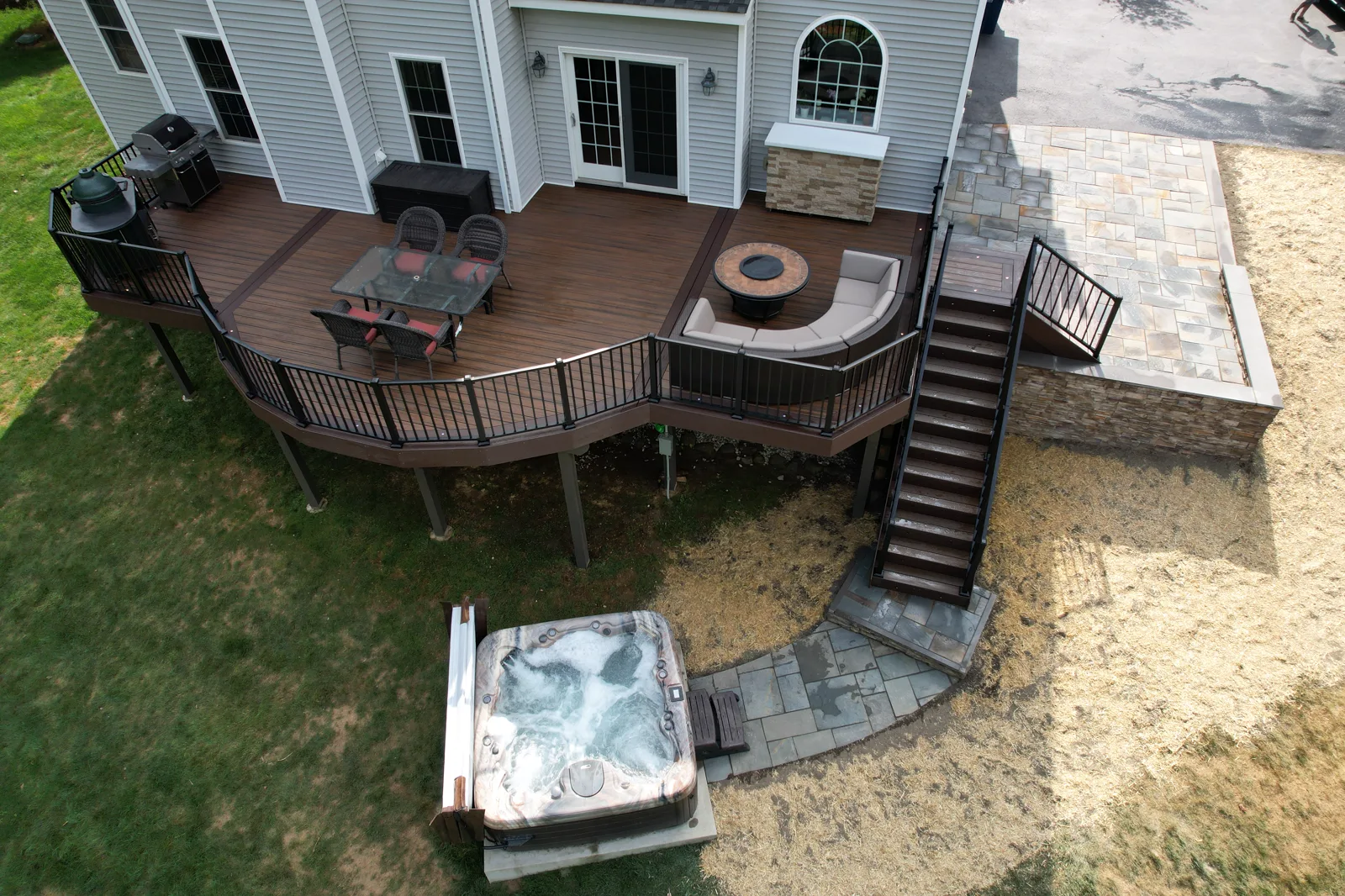
Homeowners shop the surface. Board color, railing style, the view from the stairs. Fair enough — that is what you see every morning. But the surface is not what decides how long the deck lives. The frame does. And the frame is the one part of the job nobody photographs, nobody walks on, and almost nobody asks about until it fails.
Here is the mismatch that rarely gets priced in: a capped composite board carries a warranty measured in decades, and it will genuinely last that long. The pressure-treated frame underneath it, built the default way, often will not. A 25-year board stapled to a 15-year frame is not a 25-year deck. It is a 15-year deck wearing an expensive surface.
The board outlives the wood under it
Composite changed the old math. The boards stopped rotting, but the framing lumber under them did not stop being wood.
Every fastener that holds a deck board down puts a hole in the top of a joist, and water follows it into the wood. Pressure treatment slows decay; it does not stop it at cut edges and fastener penetrations. Fifteen to twenty years in, we open up decks with composite surfaces that look nearly new and find joist tops soft enough to press a thumbnail into.
The fix is not exotic. It is a set of small framing decisions — invisible on day one, decisive in year twenty.
Joist tape: the cheapest decade on the project
Joist tape is a self-sealing membrane applied to the top edge of every joist, beam, and ledger before the decking goes down. When a fastener passes through it, the membrane seals around the shank. Water that would have wicked into the fastener hole sheds off instead.
Taping a frame adds a modest amount of material and labor to the job. Skipping it saves that amount exactly once. What it quietly costs is the difference between a frame that matches the life of the boards and a frame that fails ten years early — with the demolition and reframing bill that comes with it. On our builds the joist tops, beam tops, and ledger get taped as standard, because it is the highest-return line of work on the entire frame — and the easiest to skip, because no homeowner has ever noticed it missing during a walkthrough.
The ledger is where decks fail
When you read about a deck collapse, the story is almost always the same part: the ledger, the horizontal board that attaches the deck to the house. It carries roughly half the weight of the deck and everyone on it, and it lives at the exact seam where water running down the siding wants to get in.
A correct ledger detail is a system: housewrap integration, metal flashing that laps over the ledger and kicks water out, structural fasteners sized and spaced to the load — not nails, not deck screws — and, in many cases, a small gap or spacer detail so water cannot sit trapped between ledger and sheathing. Done wrong, it rots the ledger and the house rim joist behind it, and the failure is hidden behind the fascia until it is structural.
This is one reason engineering and permits are part of every build we do rather than a line item. The ledger connection is exactly the kind of detail an inspector and an engineered plan force into the open, and exactly the kind of detail that vague proposals leave to habit.
Hardware grade is not all the same
Joist hangers, post bases, structural screws, and bolts come in different corrosion ratings, and the difference matters in this region. Electro-galvanized hardware carries a thin zinc coating that modern pressure-treated lumber chemistry attacks. Hot-dipped galvanized carries a much thicker coating and is the correct baseline for treated framing.
Near pools, hot tubs, and anywhere salt is used — which in the Hudson Valley means any deck whose stairs get ice-melt in January — the standard should step up again: hot-dipped at minimum, stainless steel for the most exposed connections. A frame is only as strong as its connectors, and a corroded hanger fails long before the lumber it holds. You cannot see hardware grade from the deck surface — it belongs in the spec, in writing.
Low decks need to breathe
Decks close to grade have a ventilation problem nobody warns people about. With little airflow underneath, the space stays humid and the framing stays damp. Wood decays faster; debris collects and holds moisture against the structure.
The answers are decided at design time, not after: enough clearance where the site allows it, open or vented skirting instead of sealed panels, and ground treatment that drains rather than holds water. A low deck built as if it were a high deck is one of the quieter ways a frame loses years.
The frame stands on the foundation
Everything above still depends on what is below. A perfectly taped, flashed, hot-dipped frame on footings that heave with frost will rack, open its connections, and shorten its own life. This is why we pair our frames with helical pile foundations on most sites: piles are driven past the frost line to verified load capacity, they do not heave, and they give the frame a base that stays where the engineering says it will. We covered the full reasoning in why we build on helical piles in the Hudson Valley. A stable foundation also protects the details above it: a frame that moves every winter works its flashing and seals open.
What to ask about the parts that get buried
You do not need to be a framing inspector — you need answers, in writing, to a short list:
- Is every joist, beam, and ledger top taped, and with what product?
- How is the ledger flashed and fastened, and is that detail on the drawings?
- What corrosion rating is the hardware, and does it step up near the pool or the salted stairs?
- What is the foundation system, and how is its capacity verified?
- How is the underside of a low deck ventilated and drained?
- Who handles engineering and permits? (In our work, both are included on every build — never a separate line item.)
A builder who answers those questions specifically is telling you how they think about the parts of your deck no one will ever see. A builder who waves them off is telling you something too.
The surface is where you live. The frame is how long you get to. If you are comparing proposals and the frames read differently, that difference is the real one — the board warranty only pays off if the structure under it is still standing to collect.
Frequently asked
Can a composite deck really outlast its frame?
Yes, and it is common. Capped composite boards resist rot and carry long warranties, while a default pressure-treated frame without joist tape and proper flashing can fail in fifteen to twenty years — and the deck's real lifespan is whichever part fails first.
Is joist tape really worth it?
It is one of the highest-return details on the whole project. Fastener holes in joist tops are the main way water gets into a frame, and tape seals around each fastener as it is driven. The cost is small during construction and impossible to add later without removing the decking.
What is the most common serious deck failure?
The ledger connection to the house. It carries about half the deck's load and sits where water wants to enter. Correct flashing, structural fasteners, and an inspected, engineered detail are what prevent it — which is one reason engineering and permits are included in every build we do.
Does hardware grade actually matter near a pool?
It does. Electro-galvanized connectors corrode quickly against modern treated lumber, and salt from pools or winter ice-melt accelerates it further. Hot-dipped galvanized is the correct baseline, with stainless steel for the most exposed connections around pools and salted stairs.
How do I know if a low deck is ventilated properly?
Vented or open skirting, drained ground cover underneath, and as much clearance as the site allows keep the framing dry. A low deck sealed behind solid panels over bare soil stays humid year-round.