Deck Proposal Red Flags Hudson Valley Homeowners Should Catch Before They Sign
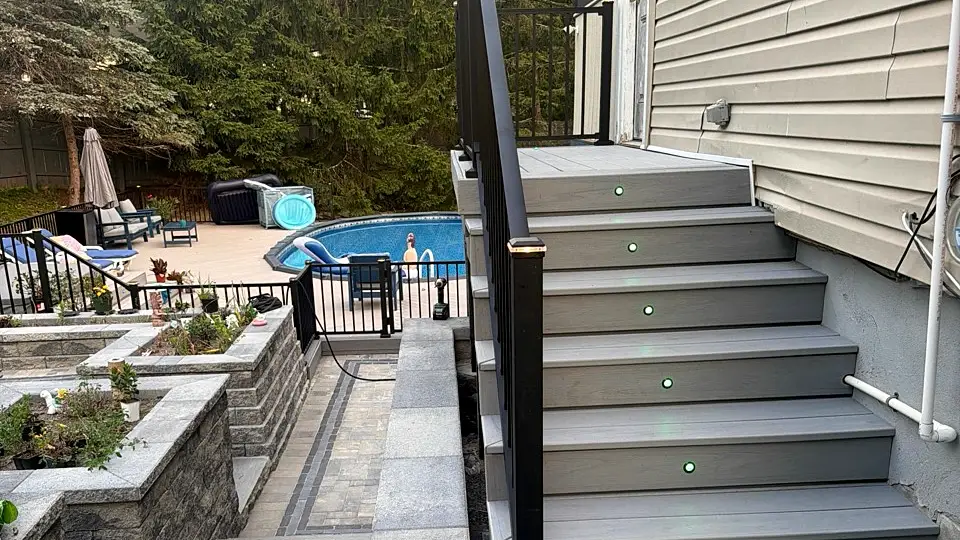
A deck proposal should make the job clearer, not easier to misunderstand. When a proposal is thin, vague, or padded with phrases that sound flexible, the risk moves from the contractor to the homeowner. That is where change orders, delays, inspection problems, and disappointing finished details usually begin.
Hudson Valley decks carry real site conditions: frost, slope, clay, ledge, drainage, sun exposure, snow load, railing code, lighting decisions, and permit requirements that do not disappear because a proposal left them out. Before signing, read the document for what it actually promises.
A low number is not a complete scope
The first red flag is a proposal built around the final number instead of the actual work. A price can look clean while the scope underneath it is full of open doors.
Watch for language like "approximately," "as needed," "builder grade," "standard railing," "composite decking," "allowance," or "to be determined on site." None of those phrases are automatically wrong, but every one of them needs a definition. If the proposal does not define the size, structure, product line, railing system, lighting plan, drainage treatment, permit responsibility, and inspection path, the number is not fully anchored.
A solid proposal tells you what is included, what is excluded, and what happens if field conditions change. A weak one leaves the hard parts for later.
Foundation language should be specific
Footings are one of the most expensive places to be vague. In this region, frost depth, soil type, slopes, ledge, and water movement can all affect how a deck should be supported. A proposal that simply says "install footings" is not enough.
Look for the foundation type, approximate count, depth or verification method, and how field conditions will be handled. Concrete footings and helical piles are not interchangeable line items. They affect schedule, access, inspection, engineering, and long-term stability.
If helical piles are proposed, the document should explain how installation is verified. If concrete footings are proposed, it should state how frost depth and inspection timing are handled. The foundation is not a minor detail. It is the part of the deck everything else depends on.
Permits and engineering cannot be missing
Permits and engineering should not be treated like optional paperwork after the sale. They define whether the deck is legal, inspectable, and properly designed for the loads it will carry.
Ask who pulls the permit, whether permit handling is included, whether drawings are included, and whether engineering is included where required. Elevated decks, structural changes, roof loads, hot tub loads, complex stairs, and multi-level designs can all change the level of review needed.
In our work, permits and engineering are part of the build standard. If another proposal leaves those items out, the lower number may only be lower because the responsibility has been pushed back onto the homeowner.
"Composite decking" is not a product spec
A proposal that says "composite decking" without naming the board is not finished. Product families have different cap technologies, color behavior, warranties, heat characteristics, profiles, fastening requirements, and visual details.
If the deck is being proposed with Trex, the proposal should name the actual line, color, border treatment, fascia approach, and fastener method. If Trex Transcend Lineage is the right board for the project, the proposal should say so in full — named product, tied to the design decision it serves: color, heat expectation, surface feel, or long-term appearance.
The same rule applies to other brands. Deckorators is an independent brand, separate from Trex, and it should be compared as its own system with its own materials, warranties, and design decisions.
Railing is not just a finishing touch
Railing changes the look, code path, cost, maintenance profile, and sightline of the project. A vague railing line is a serious proposal gap.
The proposal should name the railing system, color, infill type, post approach, gate requirements if any, stair railing details, and whether cocktail rail, lighting, or drink-rail caps are included. If cable railing or glass is being discussed, the proposal should explain how tensioning, cleaning, code spacing, and view preservation are handled.
If the proposal only says "railing included," keep reading. That phrase can hide a large difference in finished quality.
Lighting and drainage need to be designed early
Lighting is much harder to add cleanly after the deck is framed. Drainage is the same. Both affect framing, blocking, access, wiring paths, waterproofing decisions, and finished details.
A clear proposal should state whether stair lights, post-cap lights, under-rail lighting, transformer placement, switching, low-voltage wiring, and outlet coordination are included. It should also state whether an under-deck drainage system, dry-space ceiling, gutter tie-in, or water-management detail is included.
If the deck creates usable space underneath, drainage cannot be an afterthought. If stairs are part of the project, lighting should be discussed before the framing plan is locked.
Allowances and exclusions should not be hiding the real cost
Allowances can be useful when a decision is genuinely open, but they can also make a proposal look more complete than it is. An allowance for lighting, railing, electrical, excavation, disposal, masonry repair, or landscape restoration needs a clearly written scope and a decision deadline.
Exclusions matter just as much. If the proposal excludes permits, engineering, electrical coordination, gutter work, landscape repair, inspections, disposal, or old-deck removal, that should be obvious before anyone signs.
The problem is not that every proposal must include everything. The problem is when the proposal makes the homeowner discover missing scope only after work has started.
What a clean proposal should make obvious
A clean deck proposal should answer the uncomfortable questions in writing. It should define the deck size, framing approach, footing system, permit handling, engineering responsibility, decking line, railing system, lighting scope, drainage scope, stair details, fascia and trim approach, cleanup, disposal, warranty, inspection path, and change-order process.
That is the difference between a sales estimate and a build document. The proposal is the first test of how the contractor thinks. If the document is organized, specific, and accountable, the build usually has a better chance of staying that way.
As a TrexPro® Platinum contractor, our standard is to make the decision path visible before the work starts. Homeowners should not have to decode vague language to understand what they are buying.
Frequently asked
What is the biggest red flag in a deck proposal?
The biggest red flag is vague scope language around the foundation, permits, engineering, decking line, or railing system. Those are the areas where missing details can become expensive later.
Should a deck proposal name the exact decking product?
Yes. "Composite decking" is not specific enough. A proposal should name the brand, product line, color, border details, fascia approach, and fastener method.
Are permits and engineering normally included?
They should be clearly addressed before signing. In our work, permits and engineering are included as part of the build standard, not treated as surprise add-ons.
Why does railing need so much detail?
Railing affects code compliance, sightlines, stairs, lighting, gates, maintenance, and the finished look of the deck. A vague railing line can hide a major difference between two proposals.
Is Deckorators part of Trex?
No. Deckorators is an independent brand, separate from Trex. It should be evaluated on its own product systems, warranties, and design considerations.