Is the Deck You Inherited Safe? A Homeowner's Inspection Checklist
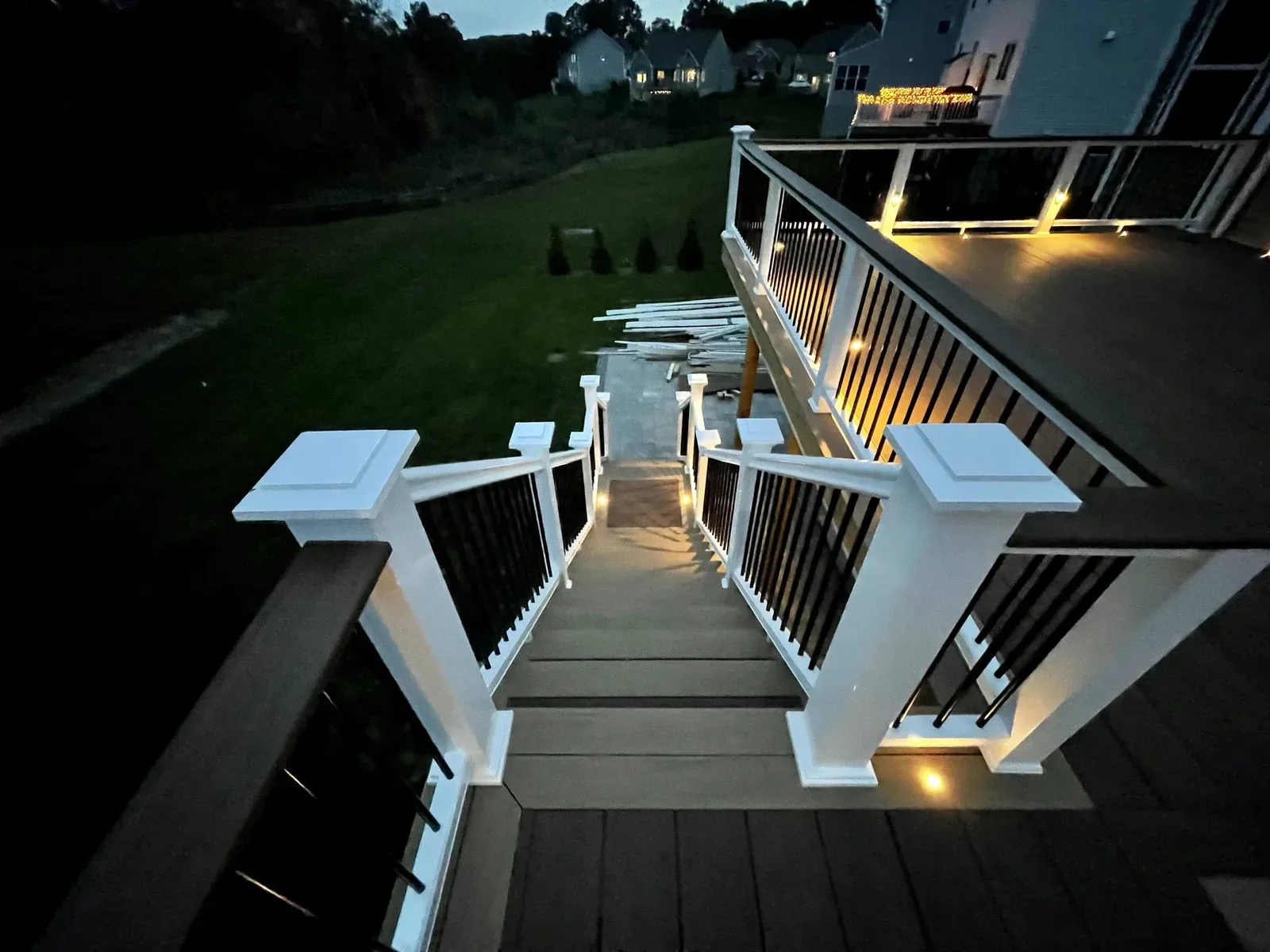
Most Hudson Valley homeowners did not build the deck they own. It came with the house — no drawings, no permit record, no idea who built it or whether anyone ever inspected it. The previous owner said it was fine. The home inspector walked on it for ninety seconds.
That is the unknown-builder problem. A deck is a structure, not a floor: it carries live loads and holds people back from a fall. When the builder is unknown, nothing is verified until you verify it. You do not need to be a contractor for a first pass — just an hour, a screwdriver, a flashlight, and a willingness to look at the parts nobody photographs for the listing.
Start at the ledger — the failure that makes headlines
When a deck collapses, the failure point is usually the ledger: the board that attaches the deck to the house. If the ledger lets go, the whole deck peels off the wall and drops as a unit, with everyone on it.
The ledger should be attached with structural lag screws or through-bolts in a regular pattern — nail heads and nothing else is a stop-everything finding. There should be visible metal flashing where the ledger meets the house; no flashing means water has been sitting against that board, and the framing behind it, for years. Underneath, every joist should sit in a metal hanger with a proper fastener in every hole. Empty holes are common on unknown-builder decks and quietly cut the connection's strength.
The wobble test: railings and guard height
Grab the top of the railing and push hard, the way a person leaning back against it would. Then push harder, the way three people crowded against it at a party would. If it flexes noticeably, moves at the posts, or creaks and shifts, it is not doing its job. A guardrail is fall protection; code expects it to resist a real horizontal load at the top, not just stand there looking straight.
Check the height too. On most decks more than 30 inches off the ground, current code expects a guard around 36 inches high, with balusters spaced so a 4-inch sphere cannot pass through. Older decks routinely fail both, and wide baluster gaps are a specific hazard for small children. Test the stair railing separately — it gets grabbed hardest, by people already off balance.
Look down: post bases buried in soil
Walk under the deck and look at where each post meets the ground. What you want to see is a post on a metal standoff base above a concrete footing, with daylight between wood and earth. What you often find is a post disappearing straight into the soil, or sitting on concrete with no standoff. Wood in ground contact wicks moisture constantly, and even pressure-treated posts rot from the bottom up — right where the load is highest.
In our region, footings also need to reach below frost depth or the structure heaves and settles with the seasons. On new builds we often solve this with engineered helical piles, verified by torque during installation — see our helical pile guide. An inherited deck on shallow or unknown footings usually shows the symptoms: an out-of-level surface, movement at the posts, gaps opening at the house.
Probe, don't stare: finding rot you can't see
Rot hides. A board can hold paint and shape while the interior turns to mulch, so the test is mechanical, not visual: press a screwdriver or awl firmly into the wood. Sound wood resists. Rotten wood gives.
Probe the bottom of every post, the joist ends at the ledger and beam, the underside of stair stringers, and anywhere two pieces of wood trap water. Pay attention to the top edges of joists under the deck boards — water sits there for decades, and a joist can be structurally gone on top while looking fine from the side.
Rust streaks are a symptom, not a stain
Orange-brown streaks running down from screws, bolts, or joist hangers are corrosion leaving the connection. Pressure-treated lumber is chemically aggressive toward the wrong metals; hardware that is not hot-dipped galvanized or stainless corrodes from the inside, and by the time streaks show, it may have lost much of its strength.
A rust streak tells you two things: this fastener is dying, and whoever built the deck may have used the wrong hardware everywhere.
Stairs and stringers
Stairs concentrate load and weather in the same place. Check that the stringers — the sawtooth boards carrying the treads — are not cracked at the narrow throat of each notch, the classic failure point. Confirm they are attached to the deck with hardware, not just end-nailed, and probe the bottom of each stringer where it lands, especially on soil or a damp slab. Then stand on each tread and feel for bounce or tilt. A stair that moves is a stair failing slowly.
Why collapses cluster around parties
Deck collapses do not happen on a quiet Tuesday with two people and a coffee. They happen at graduation parties, Fourth of July cookouts, and wedding photos — when thirty people crowd toward the railing at once and sway together.
That is not a coincidence. A deck that was never engineered has never been tested at design load. Carrying two people for fifteen years proved nothing about carrying thirty. Load spikes hit the weakest connections — ledger, posts, guard posts — at exactly the moment the consequences are worst.
Repair or rebuild?
Some findings are honest repairs: a few corroded fasteners, a railing that can be re-anchored, one soft tread. If the frame is sound, the ledger properly bolted and flashed, and the footings real, targeted repair makes sense.
Other findings mean the deck's underlying assumptions are wrong: an unbolted or unflashed ledger, posts rotting at grade, undersized framing, shallow footings, systemic hardware corrosion. Repairing surfaces on a compromised structure buys appearance, not safety. At that point a rebuild — engineered, permitted, inspected — is the honest answer.
What a professional evaluation covers
A proper evaluation goes where the checklist cannot: fastener type and pattern at the ledger, flashing condition, footing depth and bearing, joist sizing against code span tables, hardware compatibility with the lumber treatment, guard attachment, and lateral-load connections. It ends with a written finding — safe, repairable, or replace — not a shrug.
When we design a replacement, engineering and permits are part of the build, not an add-on, so the new structure is documented from footings to rail caps.
Frequently asked
How do I know if my deck's ledger board is safe?
Look for through-bolts or structural lag screws in a regular pattern, metal flashing where the ledger meets the house, and fully nailed joist hangers. Nails alone, missing flashing, or empty hanger holes are serious findings. Because the connection into the house framing is hidden, only a professional evaluation can fully confirm it.
How much should a deck railing move when I push on it?
Very little. A guardrail is designed to resist a firm horizontal push at the top, so noticeable flex, movement at the posts, or creaking under a hard shove means it needs attention. Test the stair railing separately, since it takes the hardest grabs.
Can a deck look fine and still be unsafe?
Yes — that is the most common situation with inherited decks. Rot hides inside posts and joist tops, corrosion happens inside fasteners, and shallow footings only reveal themselves through slow settling. That is why the checklist relies on probing wood and pushing on railings, not just looking.
Why do deck collapses seem to happen at parties?
Because a crowd is the first real load test many decks ever get. A deck that was never engineered can carry light everyday use for years while its weakest connections stay marginal, and a party puts dozens of people — often moving together near the railing — onto those connections at once.
Should I repair my old deck or rebuild it?
If the frame, ledger, and footings check out, targeted repairs are reasonable. If the core structure is compromised — unbolted ledger, rotted posts, shallow footings, widespread rusted hardware — a properly engineered and permitted rebuild is the better investment.