Do Composite Decks Fade
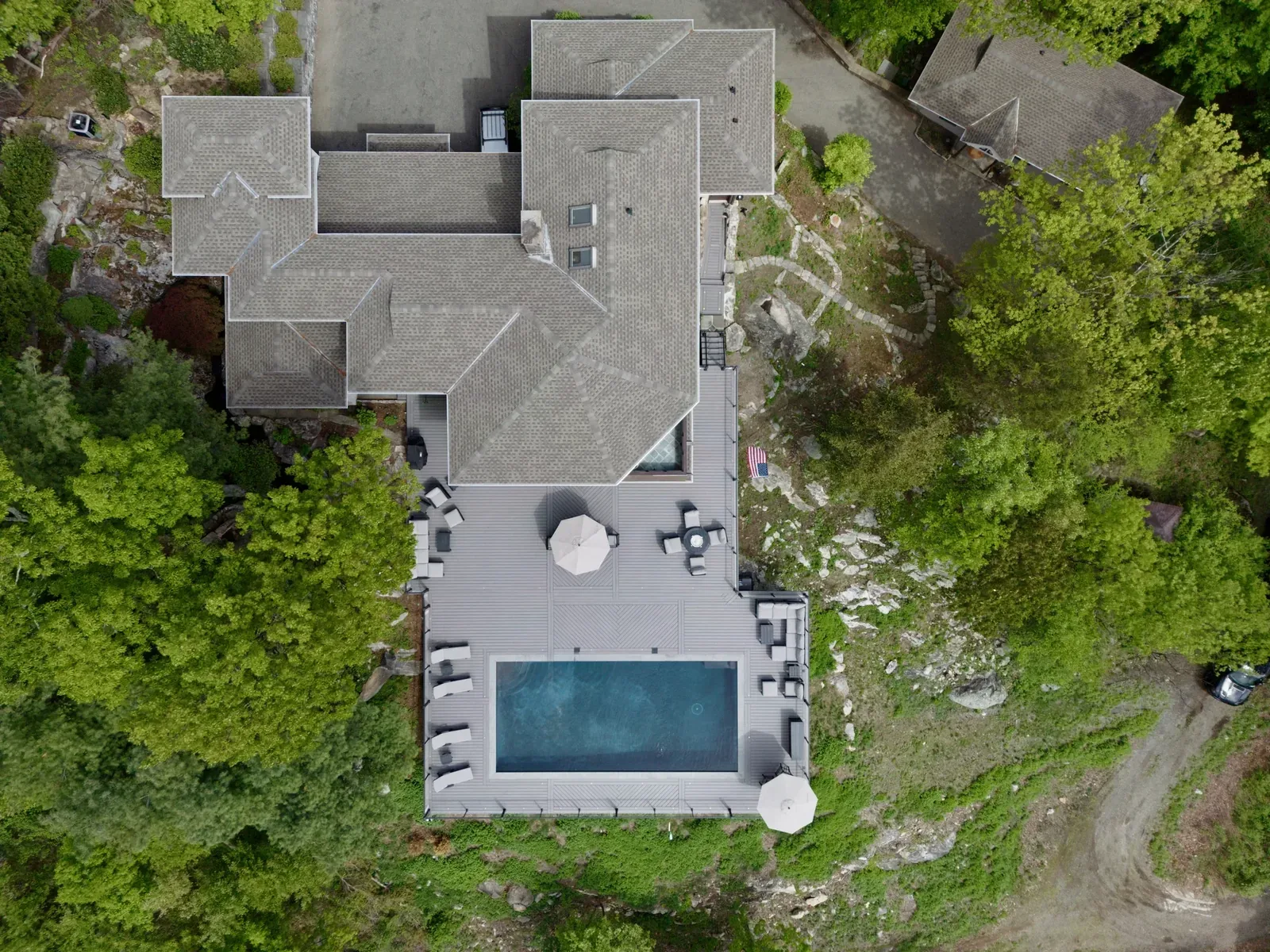
Yes. Everything outside changes.
That is not a defect. That is weather.
Sun changes a surface. Moisture changes a surface. Dirt, leaves, tree debris, shade, pollen, and how the deck gets cleaned all change how it looks from one year to the next. A deck in New York that looks identical to installation day, five years later, does not exist. Anyone selling that is selling a sample, not a deck.
The useful question is narrower. Did the color wash out past what the warranty calls excessive fade, or is the deck dirty, shaded unevenly, or aging in patches?
What people call fade
Most of the faded decks we get asked to look at are not a board losing its color across the whole field.
One section sits under a tree. One face takes the afternoon sun while the rest stays shaded. Pollen films the boards in June. Oak and maple tannins sit wet in the gaps. A corner never dries because air does not move. Leaves compost between boards from October to April. The deck looks dull, blotchy, or lighter in one zone. Wash the film off and a lot of that fade comes up with the dirt.
Genuine fade is different. The color itself has moved, past the change a capped board is built to hold. Quality composite warranties cover fade and stain inside defined limits, measured against a standard, not against the deck next door or the sample that has lived in a drawer.
Trex warrants against excessive fading and staining within the limits in the warranty document. On the lines we install, that coverage tracks the board. Trex Signature and Trex Transcend Lineage carry a 50-year limited residential warranty. Trex Select carries 35. The fade-and-stain terms follow the line. Read the document. We walk through it in the Trex warranty guide.
Patchy aging is the complaint that sticks
Nobody stands on a deck and quotes a lab number. They see one board that does not match its neighbor. A replacement that reads lighter. A wet corner. A picture-frame detail that fought the way the boards move.
That is patchy aging. We wrote the longer version in Fading Is Not the Whole Problem. The short version: consistent aging is the goal. A deck that changes together still looks like one deck. A deck that changes in spots looks wrong.
The board can only do what the frame allows
A capped board performs as well as the frame and the environment under it. That sentence separates one deck from another once both have lived outside.
Joist tape matters. Spacing matters. Ventilation matters. Drainage matters. Board layout matters. The frame matters. The care packet the homeowner actually follows matters.
A south face in full sun is a harder test than a shaded porch. We watch that. Color that holds on a sample chip can still look tired if water sits on the joists, debris packs the gaps, and one corner never dries. A perfect sample means nothing if the install traps water under it.
We are not picking a color and leaving. We are working out which face bakes, where the roof dumps water, what drops on the deck in October, and whether the gaps can clear it. The deck should age together.
What the warranty does not rescue
Fade-and-stain coverage is real. It is not a promise that a neglected deck, or a deck installed wrong, gets a new surface because it looks tired.
Damage traced to installation or to skipped maintenance generally sits outside the board warranty. A frame that stays wet, gaps packed with leaves, a pressure washer used like a driveway stripper: those are not a manufacturing defect. They are how a good board gets blamed for a bad condition.
If the dullness is a dirt film, clean it before anyone talks about a claim. The method is in Keeping a Composite Deck Clean. If one zone still looks wrong after a real wash, diagnose exposure, drainage, and airflow before swapping boards. A new board in an old field is its own mismatch. That is the replacement board problem.
The bottom line is the install, then the care. The board is the part you can see.
Frequently asked
Do composite decks fade?
They change, because they live outside. Quality capped composite is warranted against excessive fade and stain within the limits in the warranty, not against looking brand new forever. A lot of what gets called fade is dirt, pollen, tannins, or one part of the deck aging differently from the rest.
Is fade covered by the Trex warranty?
Trex warrants against excessive fading and staining within the limits spelled out in the warranty document. Trex Signature and Trex Transcend Lineage carry a 50-year limited residential warranty. Trex Select carries 35. Damage traced to installation or maintenance sits outside that coverage.
Why does one part of my deck look lighter?
Usually exposure or drainage. A face in full afternoon sun, a corner with no airflow, a section under a tree, or water sheeting off a roof will not age at the same rate as the rest of the deck. Clean it first. If the difference remains, the environment is the diagnosis, not a bad board in isolation.
Can a wash bring the color back?
Often, when the issue is a film on the cap rather than the color itself. Soap, water, and a soft brush recover more decks than people expect. Where the cause is a wet frame or packed gaps, the wash is temporary until drainage and debris are fixed.