Haven Full Color LED Deck Light — What It Actually Does to a Deck After Dark
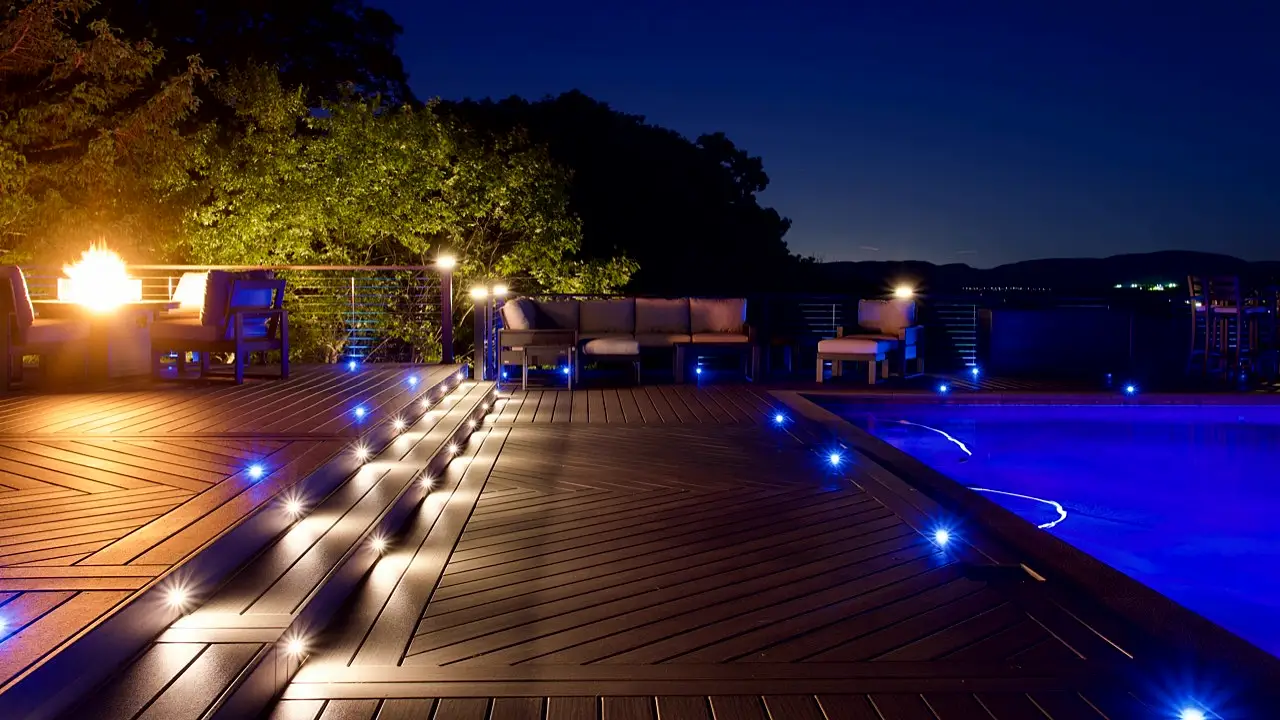
Most people think deck lighting means a couple of lights on the post caps. That is where the conversation usually ends, and that is why most lit decks look like a deck with some lights stuck on it. Trex Haven is a different thing entirely. It is a full-color, programmable lighting system with separate zones for the deck surface, the stair risers, the posts, and the surrounding landscape, all controlled from your phone. Done right, it turns the deck into a completely different space after dark. Done as an afterthought, it never quite works. Here is what it actually does and why the timing matters.
The zones, and what each one is for
Haven is built around zones, and each one does a specific job. Understanding them is how you understand the system.
In-deck lights sit flush in the deck surface itself, usually marking edges, steps, and pathways. These are the ones that make a deck feel intentional at night, low glowing points worked into the boards, guiding the eye and the foot without a single fixture sticking up. They are the hardest to add later, which is the whole point of this article.
Riser lights mount under the lip of each stair tread and wash light down the riser below. This is the safety workhorse. Stairs are where people fall in the dark, and riser lighting makes every step obvious without a harsh glare in your eyes. On any deck with stairs, this is the zone we will not skip.
Post-cap and post lights are the ones most people already know. Lights on top of or built into the rail posts, giving the deck its perimeter and a soft overall ambient level. They define the shape of the space against the night.
Landscape lighting extends the system off the deck and into the yard, lighting trees, plantings, paths, and walls. This is what keeps the deck from feeling like a lit island floating in a black void. It pulls the whole property together so your eye carries past the rail into the landscape.
Full-color programming, and what it looks like in use
Haven is not just on-and-off white light. It is full-color and programmable, which sounds like a gimmick until you live with it. In normal use, most people run a warm, low, dinner-party glow most nights, the kind of light that makes the space feel calm and finished. That alone is worth it.
Then the system flexes when you want it to. Set the zones to your team's colors for the game. Run reds and greens through the holidays without hanging a single strand of lights. Drop it to a dim path-and-stair safety level late at night. Build scenes for a party versus a quiet evening and switch between them from your phone. The colors are a fun extra. The real value is total control over level and mood, zone by zone, every night of the year.
Why lighting is designed before the boards go down
This is the part that costs people who do not know it. The wiring for in-deck lights, riser lights, and the cleanest post lighting runs underneath the deck, through the framing, before the boards are installed. Once the decking is screwed down, that space is closed up. Getting wire to a flush in-deck light after the fact means pulling boards or running visible wire, and neither gives you the clean result.
So we design the lighting plan at the same time as the deck. We decide where every fixture goes, run the wiring through the substructure as we frame, and place the boards over a deck that is already wired and waiting. When the lights go in, everything is hidden and flush, because the deck was built around the lighting, not the other way around. That is the difference between a lighting system and lights added to a deck.
What happens when lighting is an afterthought
We get these calls. A deck is finished, the homeowner realizes at night it is a black surface they cannot use, and now they want lighting. We can do solar caps and some surface-mounted fixtures, and it is better than nothing. But the flush in-deck lights, the clean riser washes, the fully integrated look, those are off the table without tearing into a finished deck. You end up with visible wire, surface boxes, or a compromise. It works, but it is not what it could have been, and it usually costs more in labor to retrofit than it would have to build in.
The lesson is simple. If there is any chance you want your deck to work after dark, and in the Hudson Valley you use that deck on summer nights and fall evenings constantly, you decide on lighting before we frame. Engineering for the electrical is included in our build, and the lighting plan is part of the design from day one, not a separate upsell after.
A deck you can only use in daylight is half a deck. Haven, planned in from the start, gives you the other half.
Call (845) 985-1000 or request a free deck estimate at pinnacledecking.com.
Frequently asked
What is Trex Haven Full Color LED Deck Light?
Haven is a full-color, programmable LED lighting system for decks, with separate zones for in-deck lights, stair risers, posts, and landscape, all controlled from your phone. It lets you set the level, color, and mood of each zone independently.
Can I add deck lighting after my deck is already built?
Some of it, yes, like post caps and surface-mounted fixtures. But flush in-deck lights and clean riser lighting run through the framing before the boards go down, so retrofitting them means pulling boards or running visible wire. It is always cleaner and cheaper to plan it in from the start.
Do I really need stair lighting?
On any deck with stairs, yes. Stairs are where people fall in the dark. Riser lights wash each step with light so it is obvious where to put your foot, without glare in your eyes. It is the one lighting zone we will not skip.
Is the full-color feature just a gimmick?
The colors are a fun extra for holidays and game nights. The real value is full control over brightness and warmth, zone by zone, so you can run a warm dinner glow most nights and a dim safety level late, all from your phone.