Helical Piles vs Concrete Footings for Hudson Valley Decks
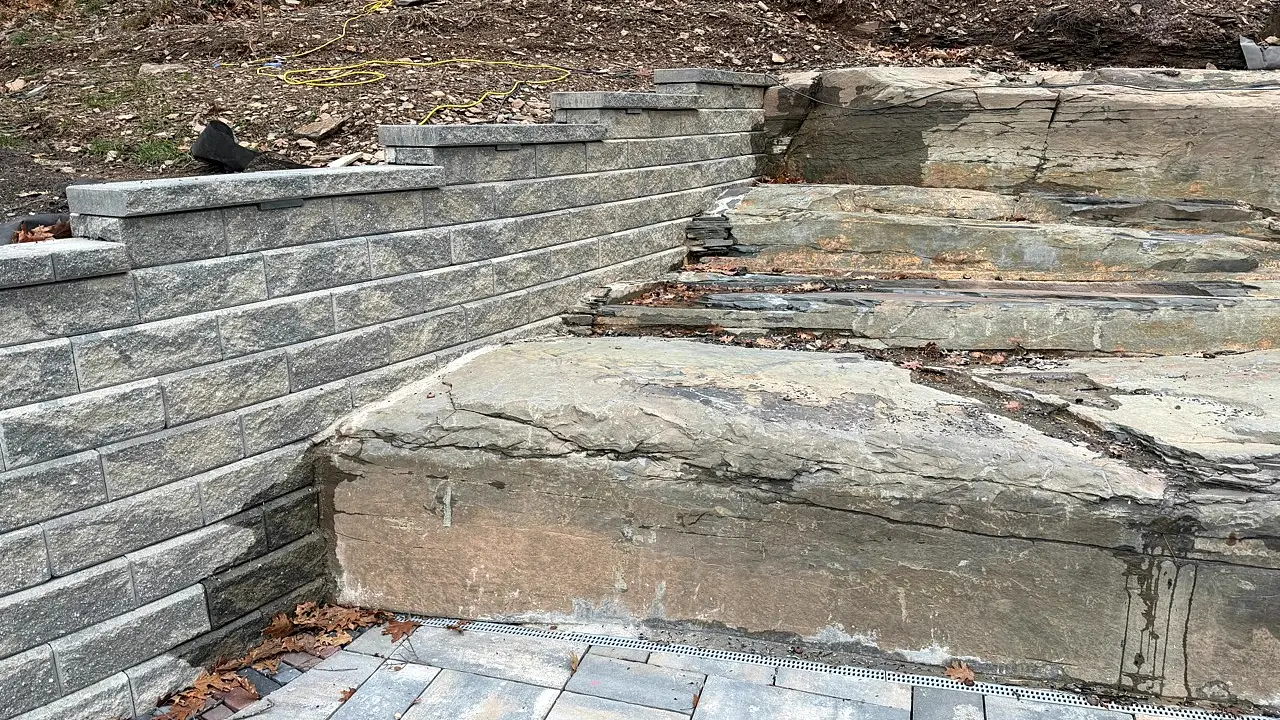
A deck foundation is not just a construction detail. It is the part of the project that decides whether the structure stays level through Hudson Valley frost, clay, slope, water, ledge, and winter movement. When two proposals use different foundation language, they may be describing two very different decks.
Concrete footings can be right in the right conditions. Helical piles can be the better answer on difficult sites. The important thing is that the proposal explains the foundation clearly enough for a homeowner to compare risk, schedule, inspection path, and long-term performance.
Frost is the first issue
Hudson Valley ground freezes and thaws hard. If water collects around a footing and freezes, it expands. If the footing is shallow, poorly formed, or bearing in the wrong soil, the movement can lift the structure and let it settle unevenly when the ground thaws.
That is why a deck proposal should not say only "install footings." It should explain what type of footing is being used, how frost depth is handled, and how the inspector or engineer verifies that the foundation is acceptable for the site.
Concrete footings depend on excavation, correct depth, proper bearing soil, inspection timing, and cure conditions. Helical piles are driven below frost and verified by installation torque, giving the project a measured load indicator at each pile.
Clay, water, slope, and ledge change the decision
Many Hudson Valley lots are not flat, dry, simple rectangles. We see clay pockets, saturated soil, steep grades, rock shelves, ledge, tight access, old fill, and drainage patterns that make a standard footing less predictable.
Clay holds water and moves. Slopes complicate excavation. Ledge can stop a footing plan from working the way it looked on paper. Wet sites can make open holes collapse or delay inspection. Every one of those conditions affects schedule and foundation confidence.
Helical piles help because they install with less excavation and can be advanced until the required resistance is reached. On sites with shallow solid rock, the answer may be a different engineered detail. The point is not that one foundation wins everywhere. The point is that the proposal should show how the foundation is chosen for the actual lot.
Torque verification is the difference homeowners should understand
The strongest argument for helical piles is not just speed. It is verification. During installation, the equipment measures torque as the pile advances into the ground. That torque reading correlates to bearing capacity, which gives the engineer and installer a field-verified number instead of a hope that the soil below an excavation is exactly what everyone expected.
Concrete footings are inspected differently. The hole, depth, size, reinforcement, and bearing condition are checked before concrete is placed. That can work well, but it relies on the conditions in the hole and on getting inspections lined up before weather or soil movement causes trouble.
If a premium proposal says "helical piles," it should explain torque verification. If it says "concrete footings," it should explain depth, inspection, bearing, and how difficult soils are handled.
Schedule reliability matters
Foundation delays can push the whole project. Concrete footings require excavation, inspection, placement, and cure time. Weather, water, access, and failed inspections can add days quickly.
Helical piles often compress that sequence. They can usually be installed with less disturbance, no cure delay, and immediate load readiness once verified and accepted. That does not mean every helical project is instant or every concrete project is slow. It means the schedule risk is different, and that risk should be visible before signing.
When homeowners compare proposals, schedule reliability belongs in the conversation. A lower number can become expensive if the foundation approach creates delays, rework, or design changes after the job starts.
Foundation language belongs in the proposal
A clean deck proposal should name the foundation system, explain why it fits the site, state whether engineering and permits are included, and describe how field conditions are handled. If the proposal is silent, the homeowner is being asked to trust the most important hidden part of the build without enough information.
As a TrexPro® Platinum contractor, our deck standard is not just the surface board or railing. It starts with the load path below the deck, the engineering behind it, and the permit path that makes the structure accountable.
If the proposal names Trex Transcend Lineage, Signature railing, lighting, or drainage in detail but treats the foundation vaguely, the proposal is still incomplete. Premium materials need a premium structure under them.
Frequently asked
Are helical piles always better than concrete footings?
No. Helical piles are often the better fit for elevated decks, slopes, wet soil, clay, and schedule-sensitive builds, but a site with shallow ledge may call for a different engineered detail. The site conditions decide.
What does torque verification mean?
Torque verification means the installer measures the resistance required to drive each helical pile. That reading correlates to bearing capacity and helps confirm the pile is carrying load in suitable soil.
Why do concrete footings fail on some decks?
Concrete footings can fail when they are too shallow, placed in poor bearing soil, affected by water, or moved by freeze-thaw cycles. The issue is usually not concrete itself, but the wrong footing detail for the site.
Should the foundation be described in a deck proposal?
Yes. A proposal should name the foundation system and explain depth, verification, inspection, engineering, permits, and how field conditions are handled.
Do permits and engineering matter for foundations?
Yes. Engineering and permits make the load path inspectable and accountable. In our work, they are part of the build standard, not surprise add-ons.