The Hidden Water Path That Rots a Deck Frame Under a Perfect Composite Surface
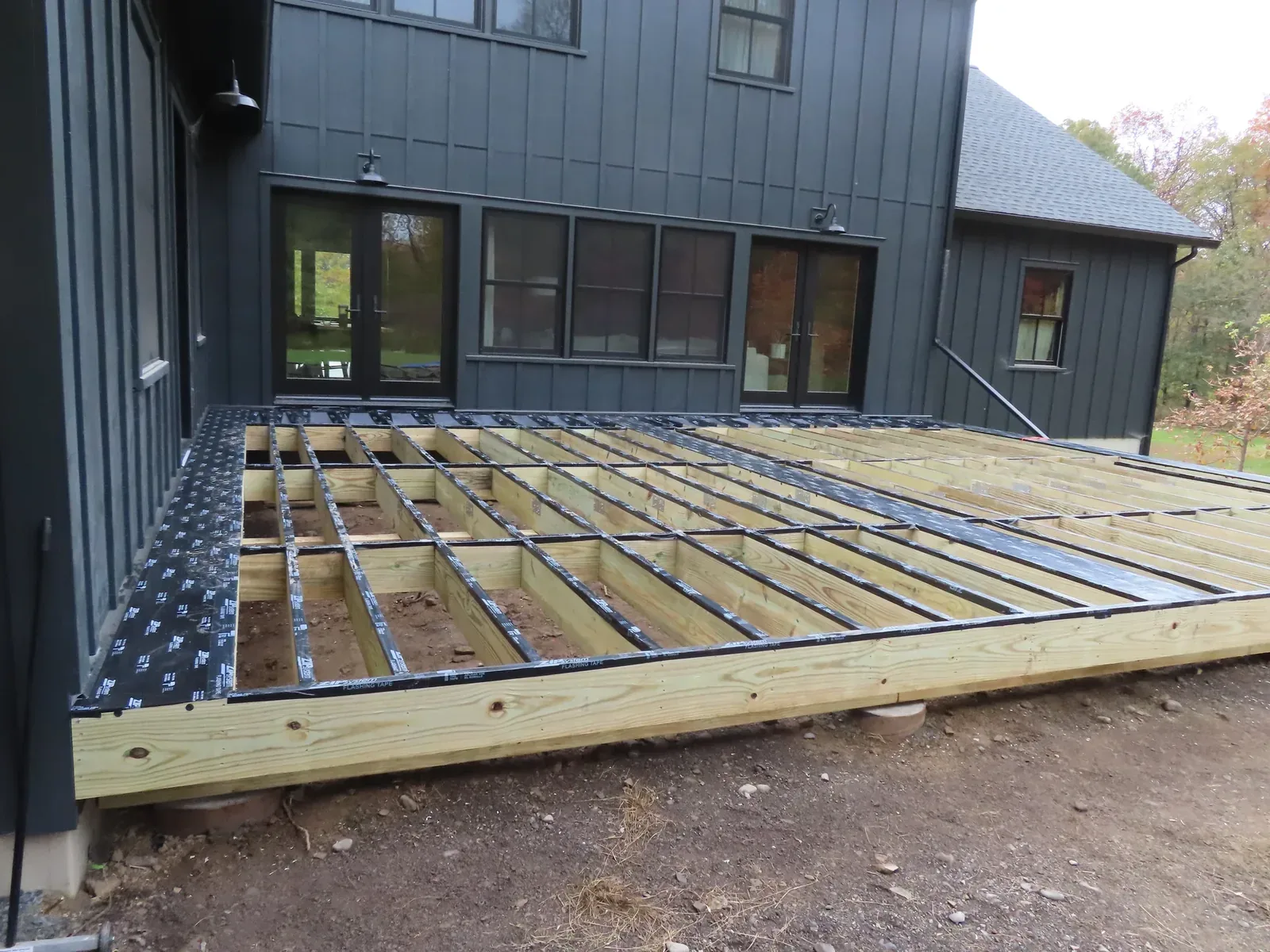
The most dangerous deck we see is not the gray, splintered one everybody knows is tired. It is the deck with a clean composite surface, a straight railing line, and a frame underneath that has been quietly wet for a decade. The surface earns the trust. The structure spends it.
Composite boards changed what a deck looks like as it ages, but they did not change where water goes. Rain still lands on the whole surface, still finds every gap and penetration, and still ends up somewhere. On a well-detailed deck, "somewhere" is the ground. On the default build, it is the ledger, the joist tops, the beam pockets, and every connection in between — the exact places nobody can see without getting under the deck with a light. We wrote about the framing decisions that prevent this in the deck you never see. This article is about the water itself: the path it takes, the signs it leaves, and the moment a simple re-decking job should stop and become an inspection.
A durable surface is not a protected structure
Here is the mismatch at the heart of it. Capped composite does not rot, so the surface stops announcing the problem. On an old wood deck, the boards failed first and forced the conversation while the frame still had life. On a composite deck over a default-built frame, the announcement never comes. The boards genuinely will last for decades — and they will spend part of that time as a good-looking lid on a structure aging much faster underneath.
Water does not need a hole to get in. Deck surfaces are designed to drain through their gaps; that is normal and correct. The question was never whether water reaches the frame. It is what the frame does with it — shed it, or hold it.
The five stops on the hidden water path
The ledger. The board that ties the deck to the house lives at the worst seam on the building: where water running down the siding meets a horizontal ledge. Without correct flashing that laps over the ledger and kicks water out, that seam feeds water behind the ledger and into the house's own rim joist. It is the most consequential connection on the deck, it is invisible behind the fascia, and it is the reason ledger detailing belongs on drawings, not in habits.
Joist tops. Every deck-board fastener puts a penetration in the top edge of a joist, and each one wicks water into end grain and fastener holes. Pressure treatment slows decay; it does not stop it at cuts and penetrations. Joist tape — a self-sealing membrane on the top edge — closes around fastener shanks and sheds the water instead. Applied correctly, tape protects the frame's most vulnerable surface. What it does not do is waterproof the frame: it is one layer of a drying strategy, not a substitute for one.
Beam pockets and post connections. Wherever a beam bears — in a pocket, on a post cap, at a notched post — water finds a horizontal surface and a bundle of end grain. These joints carry the deck's real loads, and they dry slowly because the wood is thick and the joint shades itself.
Cut ends and penetrations. Every field cut exposes untreated core in treated lumber. Every bolt, hanger, and railing-post through-fastener is a path past the surface. Good practice seals field cuts and details connections so they can dry; the default leaves them raw and hopes.
Debris traps. Leaves and seed pods work into the gaps between boards and settle where framing members double up — beam sandwiches, stair stringers, blocking bays. Wet debris is a sponge held against the wood all season. A frame designed with drainage in mind avoids creating shelves for it; an annual clean-out does the rest.
Under-deck spaces raise the stakes
Finishing the area under an elevated deck multiplies what is riding on the water path. An under-deck drainage system — a managed layer that catches water coming through the deck gaps and carries it to a gutter — can turn the space below into a genuinely useful weather-protected outdoor area. We build these, and they work.
But a drainage system is exactly what its name says: managed drainage, not a waterproof roof and not a reason to skip the framing details above it. The system needs slope, sealed laps, and a real gutter path, and the frame above it still needs its tape and flashing, because the drainage layer protects the space below the frame, not the frame itself. Anyone selling an under-deck ceiling as frame protection has the water path backwards.
The warning signs, from the ground
You do not need to open anything up to gather the first evidence. From under and around the deck, look for:
- Dark streaks or water staining on the ledger line or the house band behind it
- Rust weeping from joist hangers, fasteners, or hanger nails
- Fasteners backing out, or boards that feel spongy underfoot near the house edge
- A musty, soil-like smell under the deck in dry weather
- Debris packed at beam intersections and stair stringers
- Framing that looks wet days after the last rain — the frame is telling you it cannot dry
A probe with a screwdriver at joist tops, the ledger face, and beam pockets settles most questions. Wood that gives easily under hand pressure has already given its answer.
When resurfacing should stop
The riskiest sentence in deck renovation is "the frame's fine — we'll just swap the boards." Re-decking is the one moment in a frame's life when its top edges, ledger, and connections are fully exposed and cheap to fix. Board removal is the inspection. Covering a compromised frame with new composite does not just waste the boards' lifespan — it hides the problem for another fifteen years behind a surface that will never look distressed.
So the rule we run is simple: any resurfacing job pauses at full exposure for a structural review — joist tops, ledger and flashing, hangers and hardware, beams and posts — and the frame gets brought up to standard (tape, flashing, hardware, drainage) before a single new board goes down. If the review finds a frame near the end of its life, the honest conversation changes from resurfacing to rebuilding, and it is better had at week one than year five. Our guide to repair, resurface, or rebuild lays out how we make that call.
Water always wins the argument it is allowed to keep having. The whole craft of deck framing is ending the argument early — flash the seam, tape the edge, drain the cavity, let everything dry. None of it shows in the photos. All of it decides whether the perfect surface is telling the truth.
Frequently asked
My composite deck looks perfect — could the frame really be rotting?
It is possible, and the surface is no evidence either way. Composite boards stopped rotting; the pressure-treated frame under them did not stop being wood. Water reaches the frame through normal board gaps and fastener penetrations, and a default-built frame without taped joists and correct ledger flashing can fail decades before the boards do.
Does joist tape waterproof a deck frame?
No. Joist tape protects the most vulnerable surface — the fastener-riddled top edge of joists, beams, and the ledger — by sealing around fastener shanks and shedding water. It is one layer of a system that also needs ledger flashing, sealed cut ends, drying paths, and drainage. Applied correctly it adds real years; sold as waterproofing, it is being oversold.
Should I inspect the frame before re-decking?
Always — and full board removal is the cheapest inspection the frame will ever get. Every joist top, the ledger, and all the hardware are exposed and repairable at that moment. Any resurfacing plan that does not include a structural review at exposure is skipping the most valuable step of the job.