"Maintenance-Free" Decking: The Honest Version
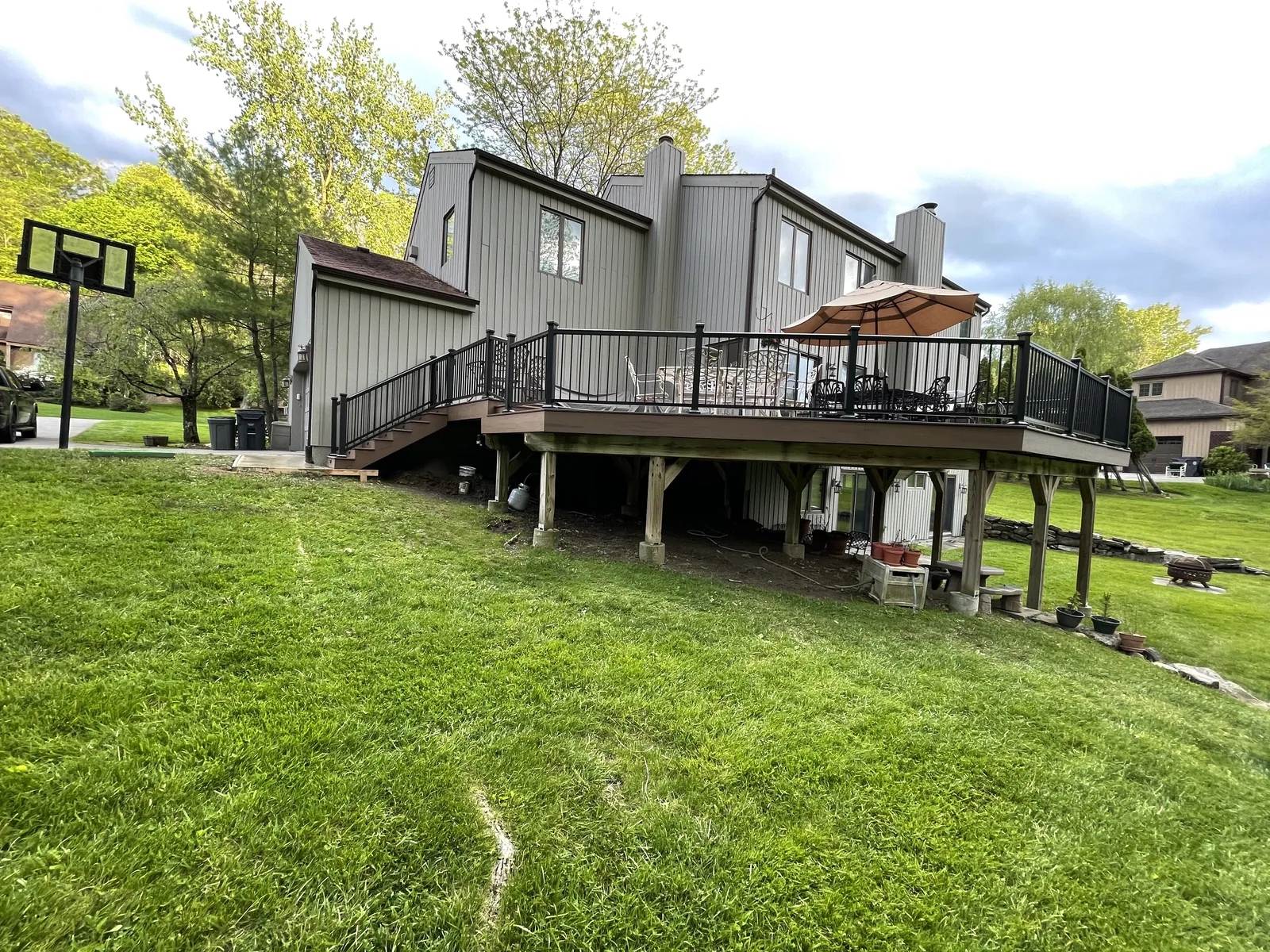
"Maintenance-free" is the phrase that sells more composite decking than any other, and it is not quite true. We install capped composite for a living and believe in the material completely, and we still will not say those words at a proposal table without correcting them.
Here is the correction: capped composite is not maintenance-free. It is maintenance-tiny. The difference between those two phrases is about ten minutes a season — and being straight about those ten minutes matters more than the prettiest brochure claim. A homeowner who expects zero and gets ten minutes feels misled; one who expects ten and gets ten feels told the truth.
What capped composite actually eliminates
Start with what the marketing gets right, because it gets a lot right. Compared with the pressure-treated deck most Hudson Valley homeowners are replacing, the list of chores that simply disappear is long.
No staining or sealing — ever. The color is engineered into a bonded polymer cap, not applied to the surface, so there is no finish to renew every two or three years and no spring weekend lost to it. No sanding, because the surface never furs, checks, or raises grain. No splinters, which matters more than it sounds once there are bare feet and kids on the deck. No rot, no boards going punky around the fasteners, no chore that, skipped for two seasons, starts costing you the deck.
That is the honest headline: capped composite eliminates every recurring project. Wood demands labor — hours, chemicals, equipment, consequences for skipping it. Composite demands none of it, and the fade and stain performance is backed in writing, which we walk through in our guide to the Trex warranty.
What it does not eliminate is the outdoors — trees, weather, and a grill. That is where the remaining list comes from.
What actually remains
The honest chore list for a capped composite deck in this region looks like this.
A seasonal wash. Soap, water, a soft-bristle brush, a rinse. Spring and fall is plenty for most decks; under heavy tree cover, add a rinse midsummer.
Pollen and tree tannins. Every June, Hudson Valley pollen films every outdoor surface in yellow-green, and oaks and maples drop tannin-stained debris that leaves marks if it sits wet — on composite, stone, or a parked car alike. It rinses off. It just does not rinse itself off.
Gap debris. Seeds, needles, and leaf fragments work into the gaps between boards. A putty knife or a hose-blast down the gaps once or twice a year keeps water draining as designed.
Grill grease discipline. The cap resists grease far better than wood, but a splatter left to bake in the sun for a month is a cleaning project instead of a wipe. A mat under the grill and a same-week wipe-down is the entire practice.
Snow choices. Composite handles freeze-thaw without the cupping and checking wood suffers, but use a plastic shovel and skip metal blades and aggressive ice-melt. Shovel along the boards, not across them.
Notice what is not on the list: nothing longer than an afternoon, no chemicals beyond soap, no equipment beyond a brush and a hose. Skip a year of washing and you get a dirty deck, not a dying one.
Mold grows on the dirt film, not the board — and why that matters
This is the distinction that settles most "doesn't composite get moldy?" conversations.
Mold needs organic material to feed on. The polymer cap on a quality composite board is not food. What mold eats is the film that accumulates on any outdoor surface — pollen, leaf matter, dust, grill residue. Leave that film in place through a damp Hudson Valley spring and mold will colonize it, on composite as readily as on vinyl siding or patio stone.
Why the distinction matters: mold on a dirt film washes off completely, because it was never attached to the board — it was attached to the dirt. Mold in wood grows into the grain, which is why wood decks need killing agents, brighteners, and refinishing where composite needs soap. The failure mode is different in kind, not just degree.
The seasonal wash exists mostly to remove mold's food supply before it matters. Ten minutes with a hose in May is the entire anti-mold program.
Furniture feet, planters, and rubber mats
Three small habits protect the surface better than any product, and nobody puts them in a brochure.
Furniture feet: hard plastic glides on heavy furniture can abrade the cap when chairs drag daily across the same spot. Soft, non-marking pads on anything that moves fix it in ten minutes.
Planters: never set a planter directly on the boards. Trapped moisture and soil tannins under a pot that does not move for a season will leave a shadow on any surface. Pot feet or a plant stand keep air moving underneath.
Rubber mats: some rubber-backed mats and rubber door mats can discolor composite through a reaction between the rubber compound and the cap. Use polypropylene or vinyl-backed outdoor mats instead. It is the kind of detail a builder should mention at handoff — and mostly does not.
The ten-minutes-a-season reality
Add up the honest version. A wash in spring and fall. A gap clean-out. A grill mat and a prompt wipe when the splatter happens. Pot feet under the planters. A plastic shovel in January. On a typical deck, that totals well under an hour a year, spent in ten-minute pieces.
Against a wood deck's staining cycle — a full weekend of prep and finishing every two to three years, forever — the composite claim barely needs exaggerating. That is the strange part: "maintenance-free" oversells a product that only needed the truth. The honest number is already the best number in the category. Rounding "almost nothing" down to "nothing" gains a builder a slightly cleaner sales line and costs the homeowner the first time June pollen proves the brochure wrong.
Why we say this at the proposal table
We tell every client the maintenance-tiny version before they sign, for a practical reason: every promise we make gets tested for years, and we would rather lose a little shine in the pitch than credibility in year one.
It is also a useful test. When you are comparing builders, listen for how each one talks about maintenance. A builder who says "you'll never touch it again" is telling you how he handles inconvenient truths in general — and the ones on a live job site are bigger than pollen. A builder who mentions the rubber mats and the pot feet is showing you what his punch lists and follow-through will look like. We have written more about what to look for in a deck builder, and honest maintenance talk belongs on that list.
The product is genuinely excellent. It deserves an honest sentence, and the honest sentence still wins.
Frequently asked
Is composite decking really maintenance-free?
No — it is maintenance-tiny. Capped composite eliminates staining, sealing, sanding, splinters, and rot, but it still needs a seasonal soap-and-water wash, gap clean-outs, and simple habits around the grill and planters. The total is under an hour a year.
Does composite decking get mold?
Mold can grow on the film of pollen, leaf debris, and dirt that accumulates on any outdoor surface, but on quality capped boards it does not grow into the board itself. It washes off completely with soap and a soft brush, and a seasonal rinse prevents most of it.
How do I clean a composite deck?
Soap, water, and a soft-bristle brush, followed by a thorough rinse — spring and fall for most decks. Clear the gaps between boards of seeds and needles once or twice a year so water drains properly. No harsh chemicals and no refinishing products.
Will my grill or furniture damage composite decking?
Not with two easy habits: a grill mat plus a same-week wipe for grease splatter, and soft non-marking pads under furniture that gets dragged. Keep planters on pot feet rather than flat on the boards, and choose polypropylene-backed outdoor mats instead of rubber-backed ones.
Can I shovel snow off a composite deck?
Yes. Use a plastic shovel run parallel to the boards and skip metal blades and aggressive ice-melt products. Composite handles Hudson Valley freeze-thaw cycles without the cupping and checking that wood suffers.