Planning an Outdoor Kitchen — What to Decide Before Construction Starts
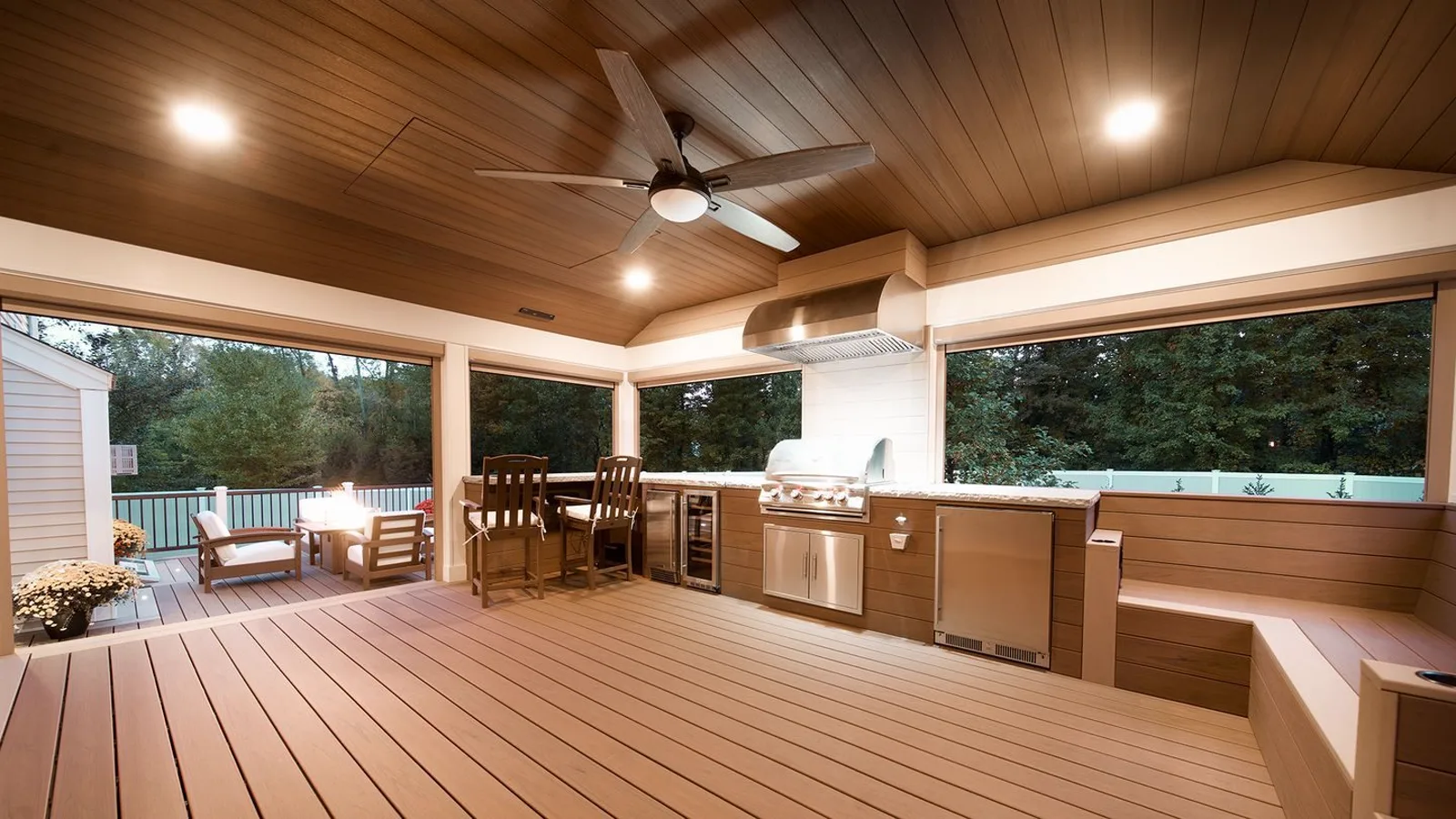
An outdoor kitchen bolted onto a finished deck is never as good as one designed into the build from the start. We have seen both. The bolted-on version always shows it. The grill sits where there was room left over, not where it should be. The gas line runs across the surface because nobody planned a chase for it. The counter is too small because the deck was already framed when the kitchen got added. None of that is fixable after the fact without tearing things out.
If you want an outdoor kitchen, decide it before we frame the deck. Here is what we work through with you first.
Layout comes before everything
The kitchen layout drives the whole deck. Where the grill goes, where you stand to cook, where guests stand to talk to you, where the counter runs. Get that right and the deck flows. Get it wrong and you have a beautiful deck that is awkward to actually use.
We start with the work triangle: the grill, the prep counter, and the sink or fridge. You should be able to move between them without walking around furniture or through the path everyone uses to get to the table. We also think about wind and smoke. You do not want the grill blowing smoke straight at the dining area or back at the house. On a lot of Hudson Valley properties the prevailing wind tells us which way the cook should face before anything else does.
Grill station placement and the heat zone
The grill is the heart of it, and it needs clearance. A built-in grill throws heat down and back. It has to sit away from anything combustible, with the right non-combustible surround and ventilation if it tucks under a roof. This is exactly the kind of thing that goes wrong when a kitchen gets added to a finished deck, because the framing and surface are already in place and there is no good way to build the heat protection in.
We plan the grill cutout, the gas or propane line, and the surround as part of the structure. The line runs inside a chase we frame for it, not across the deck where you trip on it. If you want a side burner, a smoker, or a pizza oven, we need to know now, because each one changes the counter run and the clearances.
Countertop materials that survive outside
Indoor counters do not all belong outside. Sun, frost, and freeze-thaw destroy the wrong material fast in our climate. Granite and porcelain handle the Hudson Valley winter well. Concrete can work if it is sealed and maintained. We steer clear of anything that stains, fades, or cracks when it goes from ninety degrees in August to single digits in January. The counter is also where you set hot pans and sharp knives, so it has to take abuse, not just look good on day one.
Covered or open
This is the biggest fork in the plan. An open kitchen is simpler and lets the sun in. A covered kitchen lets you cook in the rain and protects the appliances, and it changes the whole structure. A roof means posts, beams, and a load path the deck has to carry, and it usually means we are engineering the deck to hold a structure, not just people. Engineering and permits for that are part of our build, so you are not chasing a separate bill for it later.
If you cover it, you open the door to a finished ceiling. A cedar ceiling over an outdoor kitchen is one of the best-looking things we build. It warms the whole space, hides the framing, and ties the kitchen to the rest of the outdoor area. We can also run a pitched roof, recessed lighting, fans, and heaters off that same structure.
The kitchen, the lighting, and the deck are one system
The mistake is treating the kitchen as a separate project. It is not. The lighting that washes the counter, the under-rail lights on the steps, the fixtures over the dining table, the speakers, the outlets, the gas line, the water line all share the same framing and the same circuits. When we design the kitchen into the deck from the start, every one of those runs inside the structure, hidden and clean. When the kitchen gets added later, those runs end up surface-mounted, exposed, or skipped entirely.
Material choice runs through the whole thing too. We install the full Trex line, both Signature and the Trex Transcend Lineage collection, and the right board depends on your site, your layout, and how the kitchen sits on the deck. We match the decking, the kitchen surround, and the ceiling so the outdoor area reads as one design, not three things that met by accident.
What gets expensive when it is not planned early
Here is the uncomfortable part. Almost everything about an outdoor kitchen costs more when it is added after the deck is built. Running gas and water through a finished deck means opening it back up. Adding a roof to a deck that was framed for foot traffic only can mean rebuilding the structure. Cutting in a grill where the framing was not designed for it means reinforcing after the fact. Plan it from the start and all of that is just part of one clean build. Plan it late and you pay twice.
Decide on the kitchen before we frame. That one decision saves you more than any other.
Call (845) 985-1000 or request a free deck estimate at pinnacledecking.com.
Frequently asked
Can you add an outdoor kitchen to a deck I already have?
Sometimes, but it depends on how the existing deck was framed. A deck built for foot traffic may not carry the weight of a built-in kitchen or a roof without reinforcement, and running gas, water, and electrical through a finished deck usually means opening it back up. We will look at what you have and tell you honestly what is possible.
Do I need a roof over my outdoor kitchen?
You do not need one, but a cover lets you cook in any weather, protects the appliances, and opens the door to a cedar ceiling and built-in lighting. A roof changes the structure and the engineering, so decide early. Both covered and open kitchens work well when they are planned from the start.
What countertop holds up best outdoors in the Hudson Valley?
Granite and porcelain handle our freeze-thaw winters and summer heat the best. Sealed concrete can work with maintenance. We avoid materials that stain, fade, or crack when temperatures swing, because exposed counters take far more abuse than protected ones.
How early do I need to decide on the kitchen?
Before we frame the deck. The kitchen drives the layout, the structure, the gas and water lines, and the electrical. Deciding up front means all of it runs hidden inside the build. Deciding late almost always costs more and looks worse.