Fading Is Not the Whole Problem. Patchy Aging Is.
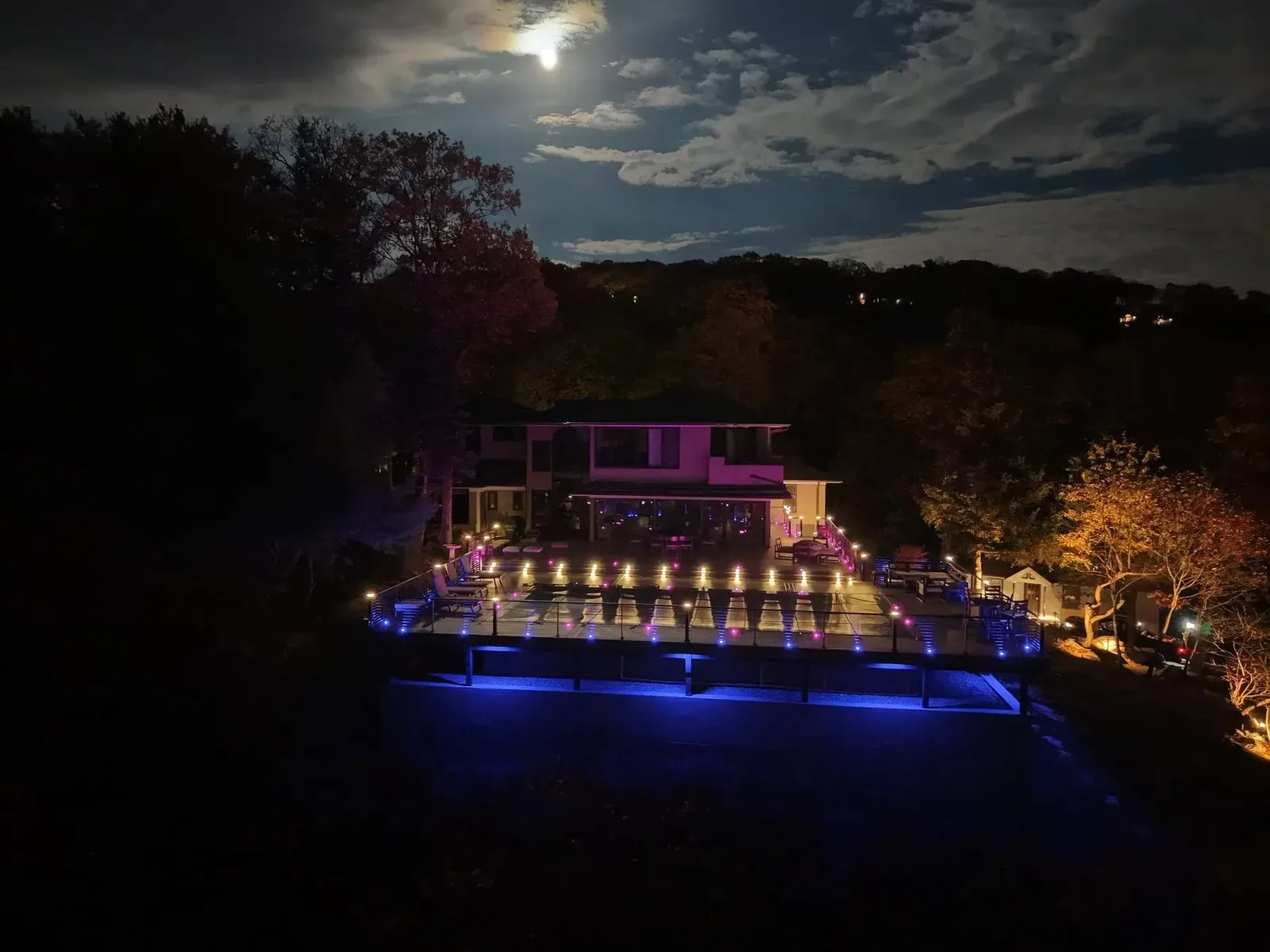
Everything outside changes.
That is not a defect. That is weather.
Sun changes surfaces. Moisture changes surfaces. Dirt, leaves, tree debris, shade, pollen, and cleaning habits all affect how a deck ages. A deck that looks identical to the day it was finished, five years later, in New York, does not exist.
The problem is not that a deck changes.
The problem is when it changes unevenly.
Patchy is what makes a deck look wrong
Nobody walks outside and thinks "this deck has faded four percent." What they notice is inconsistency.
One board fades differently. One replacement does not match. One area stays wet. One section traps debris. One corner has no airflow. One picture-frame detail fights the way the boards want to move.
That is where homeowners start seeing problems — and none of those are the board's fault in isolation. They are all environment.
Low maintenance is real. No maintenance is a lie.
We do not sell decking like a magic material, because it isn't one.
If leaves sit there. If maple helicopters fill the gaps. If water cannot drain. If the frame under the boards stays wet. If nobody blows the deck out from one fall to the next. The material is going to suffer, and it does not much matter whose name is on it.
Any board can develop mold or moisture problems when the environment underneath it is wrong. That is not a brand argument. That is physics, and every material in the category answers to it.
Which is why the install has to be right
A deck board can only perform as well as the frame and the environment allow it to perform. That single sentence is most of what separates one deck quote from another.
Joist tape matters. Spacing matters. Ventilation matters. Drainage matters. Board layout matters. The frame matters. The homeowner care packet matters.
None of that is visible in a photograph, and none of it is in the sample the salesman leaves on your kitchen counter.
What we are actually designing for
We are not just picking a board color at the consultation. We are working out what happens after the deck has lived outside for a while.
Which face gets the afternoon sun. Where the water goes when it comes off the roof. What is going to drop on this deck in October, and whether the gaps can clear it. Whether air moves under the structure or sits still. Whether the layout lets the boards expand and contract without fighting a detail we built in.
We build so the deck ages together, drains correctly, stays cleaner with less work, and avoids preventable repairs.
A perfect sample means nothing if the install traps water under it.
The bottom line is the install.
Frequently asked
Is fading covered by a decking warranty?
Most quality composite warranties cover fade and stain within defined limits, measured against a standard rather than against your neighbor's deck. What they generally do not cover is damage traced to installation or maintenance — which is exactly why the frame, the drainage, and the care packet matter as much as the board you choose.
How much maintenance does a composite deck actually need?
Far less than wood, and more than zero. Blow the debris out of the gaps a couple of times a year, especially in fall. Wash it periodically. Do not let leaves or pollen sit and compost in the gaps over a winter. That is most of it.
Why does one section of my deck look different from the rest?
Usually exposure or drainage, not a bad board. A section under a tree, a corner with no airflow, a face that takes six hours of sun while the rest sits shaded, or an area where water sheets off a roofline will all age at a different rate. The fix is diagnosing the environment, not swapping the board.
Can uneven aging be corrected after the fact?
Sometimes. A deep clean often recovers more than people expect, particularly where the issue is trapped debris rather than genuine fade. Where the cause is structural — no drainage, no airflow, water sitting on the frame — cleaning is temporary and the underlying condition has to be addressed.