The Replacement Board Problem Nobody Talks About
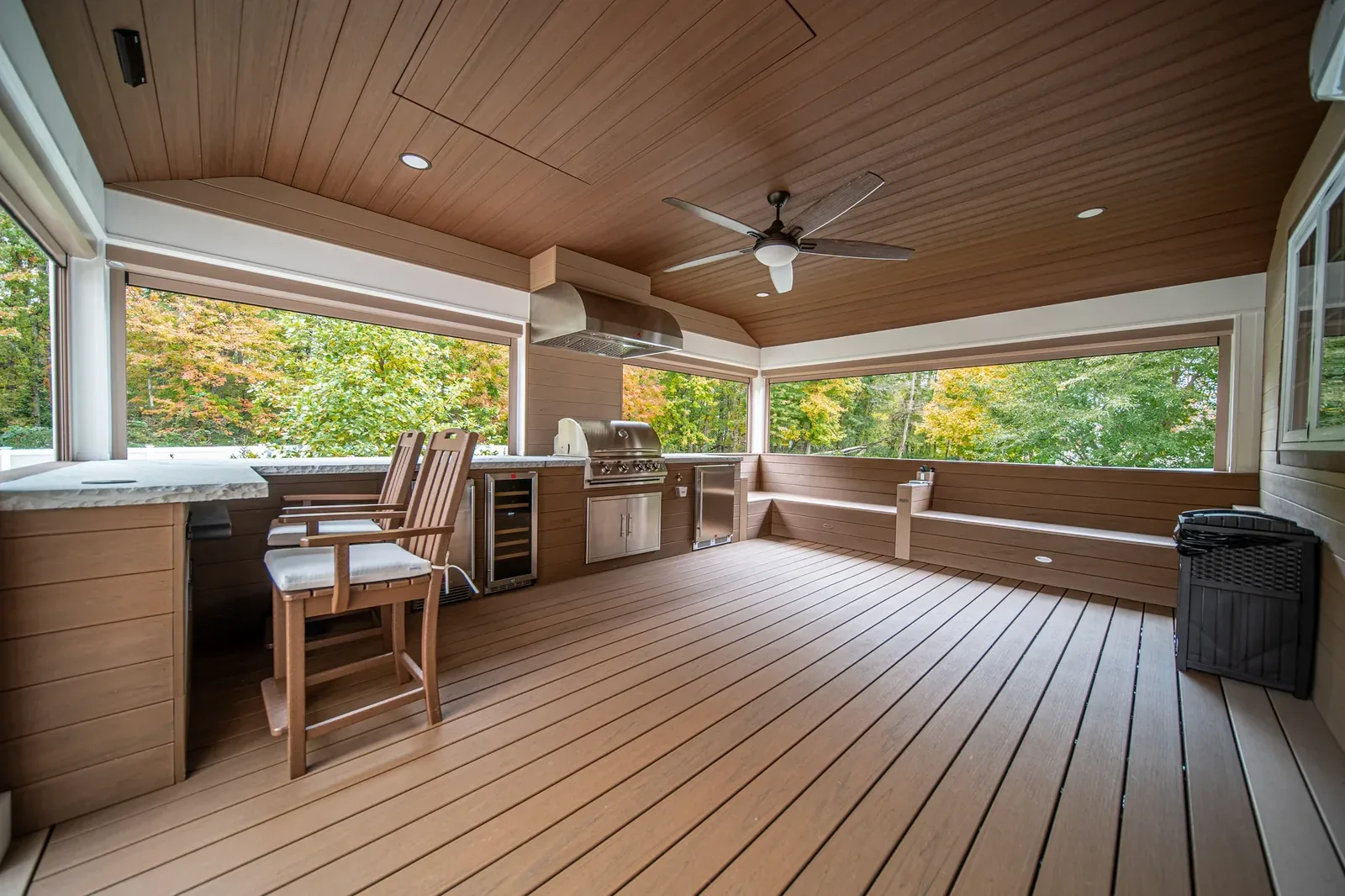
Nobody thinks about the one damaged board. Not on day one.
On day one the homeowner is looking at color, grain, railing, stairs, and the finished picture in their head. That is normal. That is the whole reason anyone builds a deck.
A contractor has to think about year three.
What happens when someone drops a planter. What happens when a grill gets dragged. What happens when furniture gouges a board. What happens when one board has to come out of the middle of a deck that has already lived through sun, snow, rain, pollen, leaves, and four seasons of cleaning.
That is where some products get tricky.
The deck can be fine and still look wrong
The old deck may still look good. It may have aged evenly. The color may be consistent across the entire surface. Everything is working.
Then one new board arrives.
Different production run. Different color tone. Different print. Different sheen. Different fade stage.
Now the deck looks patched.
That is not a failure homeowners expect when they pick a premium material. It is a real field issue, and it is one nobody brings up in a showroom.
Where we learned it
We built in PVC every day for years, and PVC taught us plenty worth keeping. One of those lessons came off a deck where a dropped planter gouged a board. We replaced it. The new board did not match the field the way it needed to. Under daylight it read as a different color.
That kind of lesson sticks.
It changes how you think about repairability. It changes how you read a warranty. It changes how you think about stock, production runs, and color consistency — and it changes what you think a "simple" board replacement actually costs.
Why this makes the install the whole argument
The goal is not to make a deck look good on day one. Any competent crew can do that. The goal is to build a deck that never needs an unnecessary board replaced.
That comes down to details that are invisible the day the job is finished:
- Spacing that leaves room for the board to move
- Drainage that gets water off and out instead of holding it
- Joist protection so the frame under the boards stays dry
- Clean fastener work that does not chew the board it is holding
- Movement-aware layouts, so the deck expands and contracts the way the material wants to
- No fantasy miters where they do not belong
Every one of those decisions is made before the last board goes down, and every one of them decides whether you are ever standing in the yard trying to match a replacement.
The part a sample cannot show you
A sample shows you color. It cannot show you what the deck looks like in year five, and it definitely cannot show you what it looks like in year five with one new board in the middle of it.
A deck that ages together is better than a deck that keeps getting patched.
That is the part worth asking about before anyone signs anything.
Frequently asked
Will a replacement board ever match perfectly?
Rarely, and no honest builder will promise it. A board that has been outside for years has changed; a board from a current production run has not. How close the match lands depends on the product, the run, the exposure, and how long the deck has been living outside. Planning so you never need one is a better strategy than counting on the match.
Does this mean composite decking is a bad choice?
No. It means every material has a repair story, and most people never hear it before they buy. Composite holds color far better than wood and does not need to be sanded and re-stained, which is why we build on it. The replacement-board question is about production runs and aging, and it applies across the category.
How do I lower the odds of ever needing a board replaced?
Most replacements we see trace back to install decisions or maintenance, not defects. Correct spacing, real drainage, a protected frame, and blowing debris out of the gaps handle the majority of it. Furniture pads and a heat shield under a grill handle much of the rest.
Should I keep spare boards from my build?
It is worth discussing at the consultation. Boards stored out of sunlight from the same production run give you a far better match later than anything you can order in year six. Whether it makes sense depends on the size of the deck and where you have to store them.