How Trex Performs in a Hudson Valley Winter
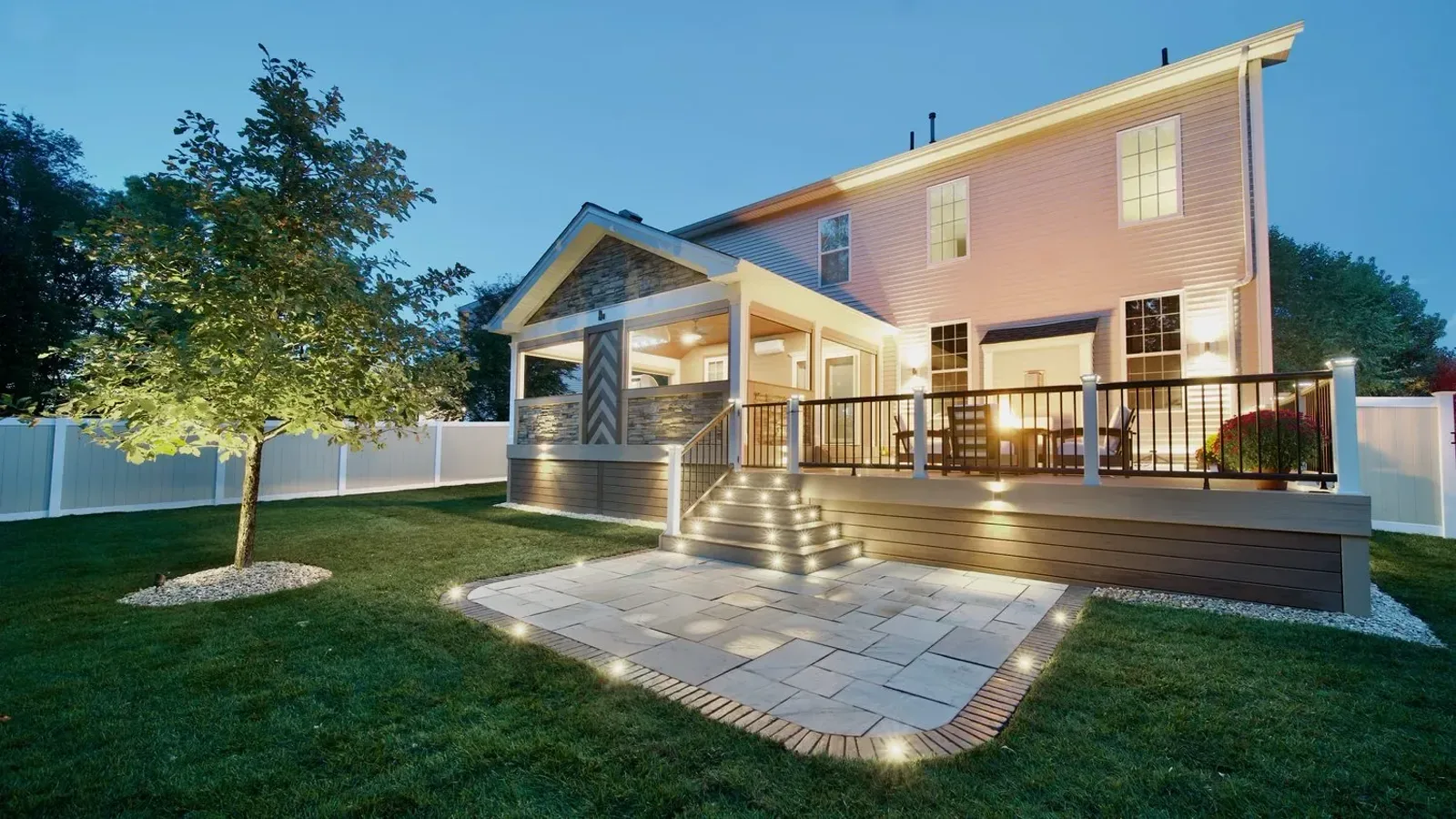
We get real winters up here. Not the kind in the glossy catalog photos shot in Florida. Hudson Valley winters mean weeks below freezing, daily freeze-thaw swings in the shoulder seasons, ice on the boards, snow piled two feet deep, and road salt tracked up the steps from January through March. Then the summer sun comes back and bakes everything UV all day. Five seasons of that is the real test of a deck. Here is what we have watched happen to composite boards, the good ones and the bad ones, after they have lived through it.
Freeze-thaw is the real enemy
The single most destructive thing in our climate is not the cold. It is the freeze-thaw cycle. Temperature crosses 32 degrees, water in any gap freezes and expands, then thaws and contracts. In spring we can run that cycle every single day for weeks. Wood handles this badly, which is why your grandfather's deck rotted at the joints. Composite handles it far better, but only if the board is built right and installed right.
On a quality capped board like Trex, the cap fully surrounds the core, so water never soaks in the way it does with wood or with cheaper boards that have a weak cap. On lesser boards we have seen the cap separate from the core after a few winters of this, water working into a micro-gap and prying the layers apart. Once it starts, the board is done. That failure is almost always a freeze-thaw failure, and it is why we stopped installing the boards it happened to.
Thermal expansion and why gapping matters
Every material moves with temperature. Composite expands when it heats and contracts when it cools, and our climate swings hard, from a baking summer board to a January morning at single digits. That movement is real and it is significant over the length of a long board.
This is where installation separates a deck that lasts from one that buckles. Composite has to be gapped correctly, both end to end and along fasteners, so it has room to move with the seasons. Get the gapping wrong and in deep cold the boards pull at the screws, or in summer heat they push against each other and lift. We have been called out to fix decks where another crew butted the boards tight to look clean on install day and then watched them fight each other through the first winter. Done right, you never see it move. That is the whole job, the part nobody notices because it works.
Snow load and ice
People worry about shoveling composite. You can shovel a Trex deck. Use a plastic-edged shovel, push with the grain, and skip the metal blade that gouges. Snow load itself is a structure question, not a board question. A deck built to code on a properly sized substructure carries our snow loads without complaint, and engineering for those loads is included in every build we do, never a line item we tack on later.
For ice, calcium chloride or a rock-salt-and-sand mix is fine on Trex. We tell clients to avoid anything with added colorants or harsh deicers, and to rinse in spring, but the board itself shrugs off winter ice. We have walked decks through their fifth winter where the surface looks like the day we left.
Road salt and stain resistance
Here is the one homeowners do not think about until April. All winter you track road salt, deicer, and grime up the steps and across the deck. On wood, that is brutal. On a cheap composite with weak stain resistance, salt residue and the dirt it carries can leave a haze that does not fully clean off.
Trex's fade-and-stain warranty exists because stain resistance is exactly what goes wrong with lesser composite over time. The capped surface does not absorb the salt or the grime. Come spring, a wash with soap and water and the deck comes back. We have seen five-year-old Trex decks in Fishkill and Carmel clean up to near-new. We have also seen three-year-old budget boards that never fully recovered from one bad winter of salt.
Fade resistance after the summer
Winter is half the test. The other half is UV. Our summers throw full sun at a south-facing deck for months, and UV is what fades color. This is where the bad boards reveal themselves, going chalky and dull, the color washed out for good because it is gone, not dirty.
Trex holds color. The fade warranty backs a specific limit on how much the board is allowed to change over decades, and in our real-world decks the color stays true season after season. Across both the Trex Signature and Trex Transcend Lineage lines, the fade resistance is engineered in, not sprayed on, so it does not wear away with the surface.
What we tell our clients
A composite deck in the Hudson Valley is going to take everything the year throws at it. The board matters, and we install the full Trex line, Trex Signature and Trex Transcend Lineage both, because the right one depends on your exposure and your design. But the install matters just as much. Correct gapping, hidden fastening, and a substructure built and engineered for our snow loads are what carry a deck through five winters looking like one. That part is on us, and it is included in every build.
Call (845) 985-1000 or request a free deck estimate at pinnacledecking.com.
Related reading
- Snow on a Composite Deck: What to Use, What Voids the Warranty, What Can Wait
- Roofs, Pavilions, and Motorized Shades — Making Outdoor Living Work Three Seasons Up Here
Frequently asked
Can I shovel my composite deck in winter?
Yes. Use a plastic-edged shovel and push with the direction of the boards. Skip the metal blade. For ice, calcium chloride or a rock-salt-and-sand mix is fine on Trex.
Does composite decking crack in the cold?
Quality composite like Trex does not crack from cold if it is installed with correct gapping so it can move with temperature. Cracking and buckling almost always trace back to a bad install, not the material.
Will road salt stain my deck?
On Trex, no, not permanently. The capped surface does not absorb salt or grime, so a spring wash with soap and water brings it back. Cheaper boards with weak stain resistance are the ones that haze and do not fully recover.
Does the sun fade composite decking?
Cheap boards fade and go chalky. Trex carries a fade warranty with a defined limit over decades, and the resistance is built into the board across both the Trex Signature and Trex Transcend Lineage lines, so it holds color through our summers.