Trex vs Pressure-Treated — The Comparison Most People Get Wrong
Almost every homeowner starts here. Pressure-treated wood costs less upfront, so it feels like the smart choice. We get it. When you are staring at two numbers and one is smaller, the smaller one looks like the win. But this is the comparison most people get wrong, because they only look at day one. They never run the math on year five, year ten, or year fifteen. We have. We have also torn out enough rotted PT decks to know exactly how this story ends.
We are not going to throw prices at you. We do not do that. What we will do is show you the real comparison, the one that counts the cost over the life of the deck instead of the cost on the day it is built.
What pressure-treated actually is
Pressure-treated lumber is real wood, chemically treated to resist rot and insects. It is the cheapest way to build a deck that does not fall apart in three years. For a long time it was the only option. It still has a place for the most budget-driven projects. But it is wood, and wood in the Hudson Valley lives a hard life.
What PT looks like after five winters
Here is the part the lumber yard does not tell you. From the day a PT deck is installed, the clock starts. To keep it looking decent, you have to clean it, sand it, and seal or stain it. Skip a year and the wood drinks in water, then freezes, then thaws, over and over through our winters. That freeze-thaw cycle is brutal on wood.
After five winters, an unmaintained PT deck shows it. Boards cup and warp. Cracks open along the grain. Screws back out and heads pop up. Splinters appear right where bare feet go. The color has gone gray and blotchy no matter what it looked like new. We see this constantly. Five years is not a long time, and the deck already looks tired.
Even a well-maintained PT deck only buys you time. You are sanding and resealing every couple of years for as long as you own it. That is real money and real weekends, every year, forever.
What Trex looks like after ten years
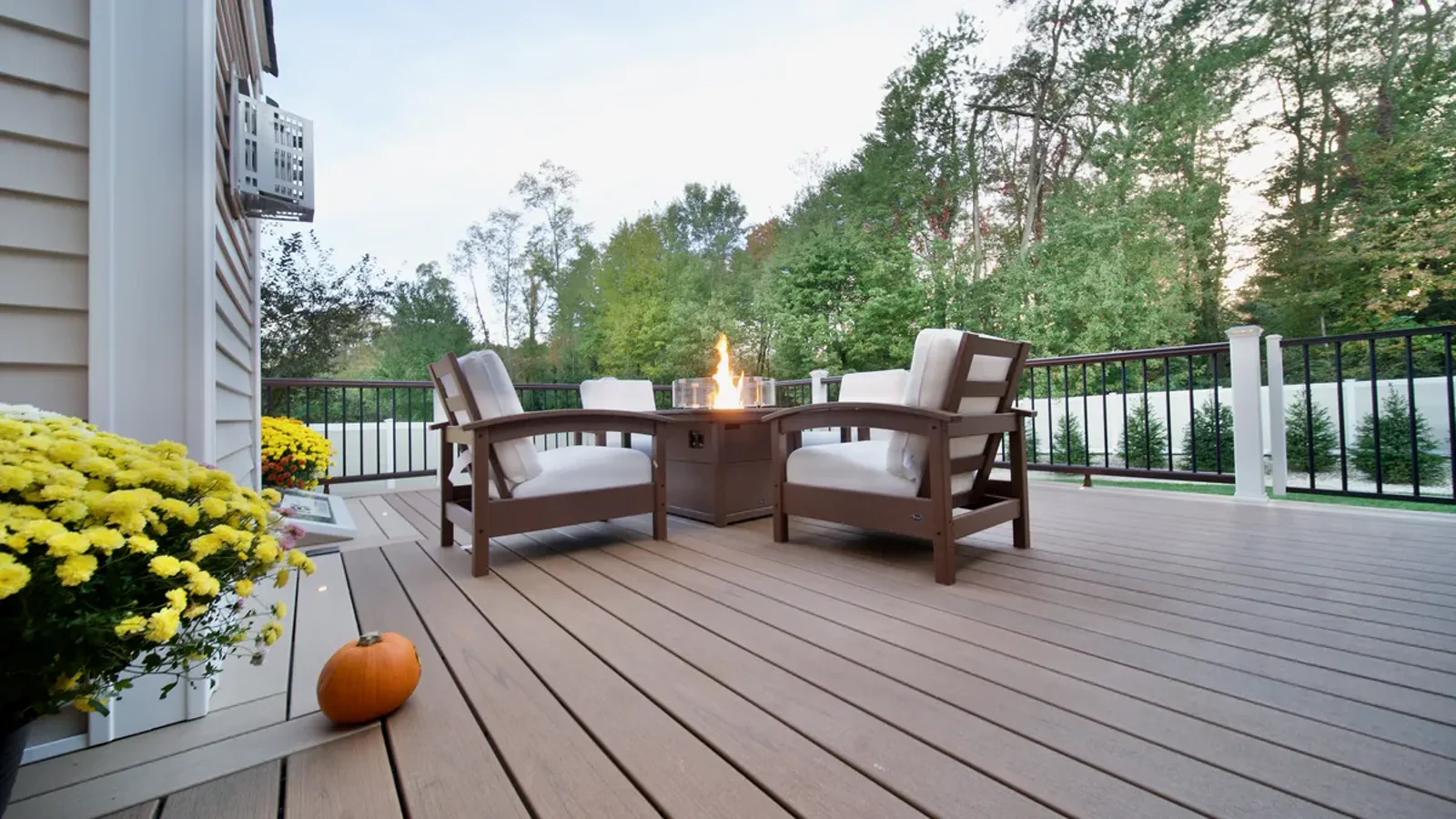
Now look at the other side. A Trex deck built right does not get sanded, does not get sealed, does not get stained. You wash it. That is the maintenance. After ten years in the same Hudson Valley weather that destroyed the PT deck, a Trex deck looks close to the day it was finished. The cap that protects the board fights fading, staining, and the moisture that wrecks wood. No cupping. No splinters. No popped screws.
We install the full Trex line, including Trex Signature and the entire Trex Transcend Lineage collection, and we match the board to your site and sun exposure. Whichever board the project calls for, the maintenance story is the same: wash it and use it.
The real cost-per-year math
This is where the comparison flips. Take the upfront cost of each deck. Now add what you spend keeping it alive. The PT deck costs you cleaning supplies, stain, sealer, and either your weekends or a contractor's bill, every year, for the life of the deck. Then, somewhere around year twelve to fifteen, the PT deck needs to be replaced or heavily rebuilt. So you pay for it twice.
The Trex deck costs more on day one and almost nothing after. No annual stain. No replacement at year fifteen. Spread the cost across the years you actually use the deck, and the gap closes fast, then reverses. By the time the PT deck is gray and warping, the Trex deck has paid for the difference and kept going.
Cheaper upfront is not cheaper. It is just cheaper today.
The part nobody puts a number on
There is a cost the math misses. The PT deck is a chore. It nags at you every spring. The Trex deck is a place you actually use, year after year, without a project list hanging over it. For a luxury outdoor retreat, that is the whole point. You are buying back your weekends and a space that looks finished a decade from now.
There is also the day you sell. A gray, cupped wood deck reads as deferred maintenance to a buyer, and they price it that way. A composite deck that still looks new reads as a finished feature they do not have to touch. We have watched the same square footage help a sale on one house and drag on another, and the difference was the deck surface. That is value the upfront price tag never shows you.
If your budget genuinely only reaches pressure-treated, we will tell you that straight. But do not choose PT because you think it is the smart financial move. Over the life of the deck, it usually is not. Run the real math first.
Call (845) 985-1000 or request a free deck estimate at pinnacledecking.com.
Frequently asked
Is pressure-treated really cheaper than Trex?
Only on day one. PT costs less to build but demands cleaning, sanding, and sealing every year, plus replacement around year twelve to fifteen. Over the life of the deck, those costs usually erase the upfront savings and then some.
How long does a pressure-treated deck last in the Hudson Valley?
With diligent maintenance, often twelve to fifteen years before major rebuild or replacement. Our freeze-thaw winters are hard on wood, and an unmaintained PT deck can look gray, cupped, and splintered in as few as five years.
Does Trex need any maintenance?
You wash it with mild soap and water a couple of times a year. That is the entire routine — no sanding, no sealing, no staining, ever. The cap does the work a homeowner used to do by hand.