Why We Stopped Installing AZEK PVC Decking
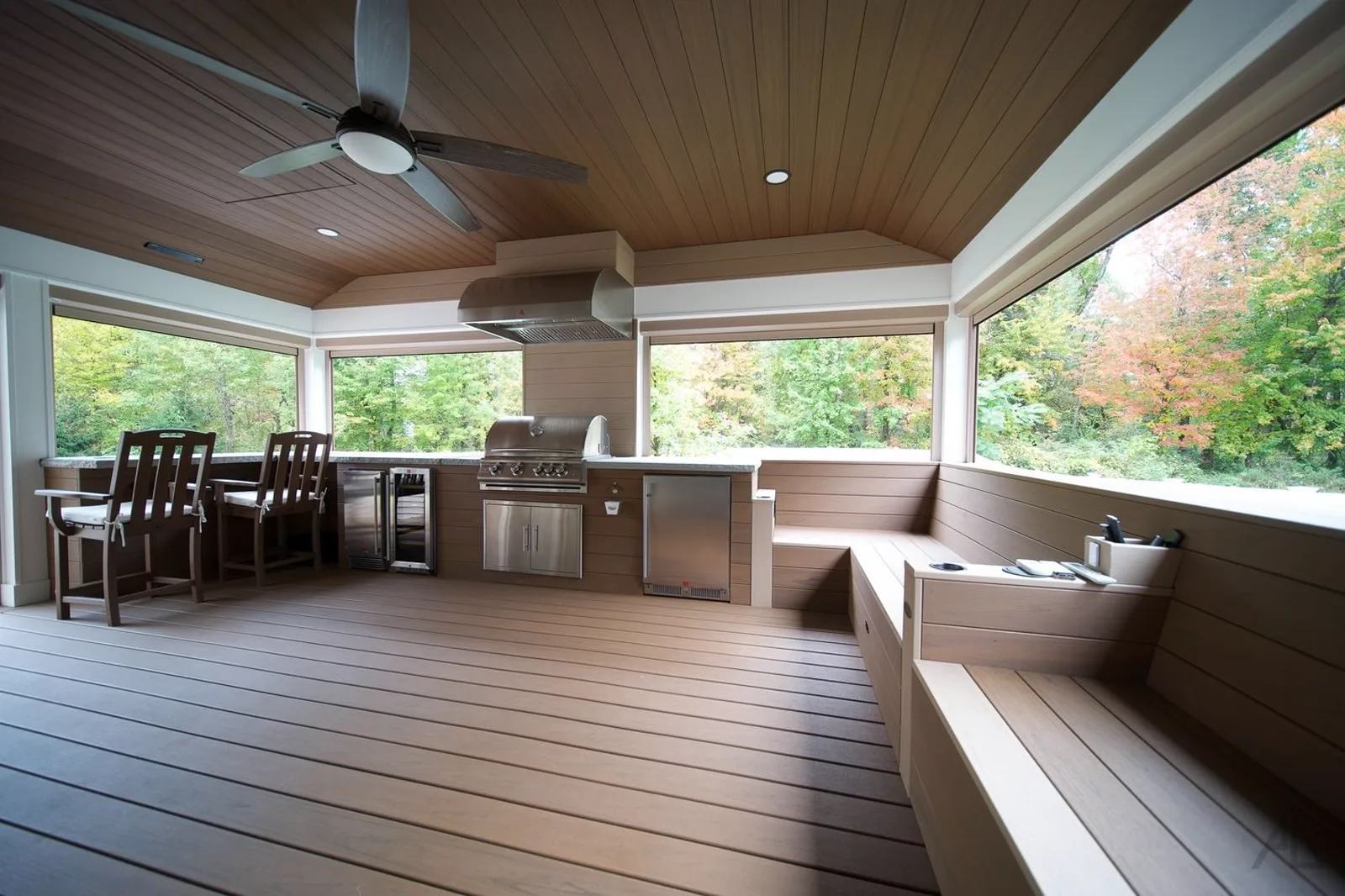
Let us say this first, because the rest of it is going to read like criticism and it isn't: PVC made us better builders. AZEK makes a quality board. The company stands behind it. We installed it for years and we installed it well.
PVC is also where our eye changed. Castle Gate changed how we saw a deck — the depth, the lighter feel, the borders and fascia and picture frames pushed harder than we'd pushed them before. If it wasn't for PVC, we'd probably still be installing the same thing the same way we always had. We don't trash the material that taught us the trade.
So this isn't a knock on PVC everywhere. It's a Hudson Valley story about what we watched it do here, and why we followed the better system for the way we build now.
What PVC is, and why it moves
AZEK is a PVC board — plastic through and through, not a wood-plastic composite. That buys real advantages. It's light, it shrugs off moisture, it won't rot. But every material grows when it heats and shrinks when it cools, and PVC does it more than capped composite does. The hotter the day and the colder the night, the more the board works across a single afternoon.
In a mild, stable climate you manage that. In the Hudson Valley — a deck baking at noon and cooling hard by evening, then dozens of freeze-thaw cycles all winter — the movement adds up. That's the heart of it.
The North tells the truth
Here's what years of installing it taught us. On long runs, the expansion and contraction lean on the fasteners and the butt joints. Tight 45s open. A gap that's clean in spring opens in July and shifts again in the cold. Replace one board a few seasons in and it doesn't always match the rest, so a deck that aged fine as a whole suddenly looks patched. On a hot afternoon a PVC deck fighting itself will tick and creak as the boards push the screws. Clients have asked us why their old deck talks back in the heat. That's the movement you're hearing.
None of that means an AZEK deck falls apart. Installed by someone who respects the material, with the right gapping and fastening, it holds. But you're always detailing around a board that's trying to move, and we'd rather build on something that wants to stay put. You can't outsmart the board. The backyard tells the truth that the sample never does.
What we build on instead
We moved our builds to capped composite, and specifically to Trex Signature, Trex Transcend Lineage, and Trex Select. Capped composite is a wood-plastic core wrapped in a hard shell. It still moves, everything does, but it moves less than PVC and the movement is easier to detail out clean. In our freeze-thaw climate, smaller and more predictable is exactly what we want under your feet.
The right Trex board depends on your site, your sun, and your budget — a full-sun deck specs differently than a shaded one. But across the board, the joints stay tighter over the years than PVC did up here, and the system around the board — railing, cable, under-deck drainage, warranty — all comes from one engineered line instead of parts that met by accident.
The honest bottom line
If you've got an AZEK deck and you love it, keep loving it. A well-built one will serve you, and you didn't make a mistake. This is us telling you why, on a new build in this specific climate, we choose differently — and why we'll always give you the real reason behind a recommendation instead of just naming a brand.
PVC made us who we are. Trex became the system we trust to build it cleaner, in our winters, with our name on it.
Call (845) 985-1000 or request a free deck estimate at pinnacledecking.com.
Frequently asked
Is AZEK a bad deck product?
No. AZEK is a quality PVC board and the company backs it well. We found that PVC's expansion and contraction in Hudson Valley freeze-thaw conditions worked against the long-term stability we want on our builds, so we changed what we install. That's a climate call, not a verdict on the product everywhere.
Why does PVC move more than composite?
PVC is plastic all the way through, so it expands and contracts more with temperature swings than capped wood-plastic composite. In our climate, with wide daily swings and a winter full of freeze-thaw cycles, that extra movement shows up at the joints and fasteners over time.
Should I replace my existing AZEK deck?
If it was installed well and you're happy with it, no. A properly built PVC deck holds up. This isn't about ripping out what works — it's about what we choose to build new in this climate.
Didn't PVC teach you something worth keeping?
A lot. PVC and Castle Gate changed how we see detail — borders, fascia, picture frames, finish. It made us sharper builders. We carry that into every Trex deck we build now.